
Last updated October 16, 2026
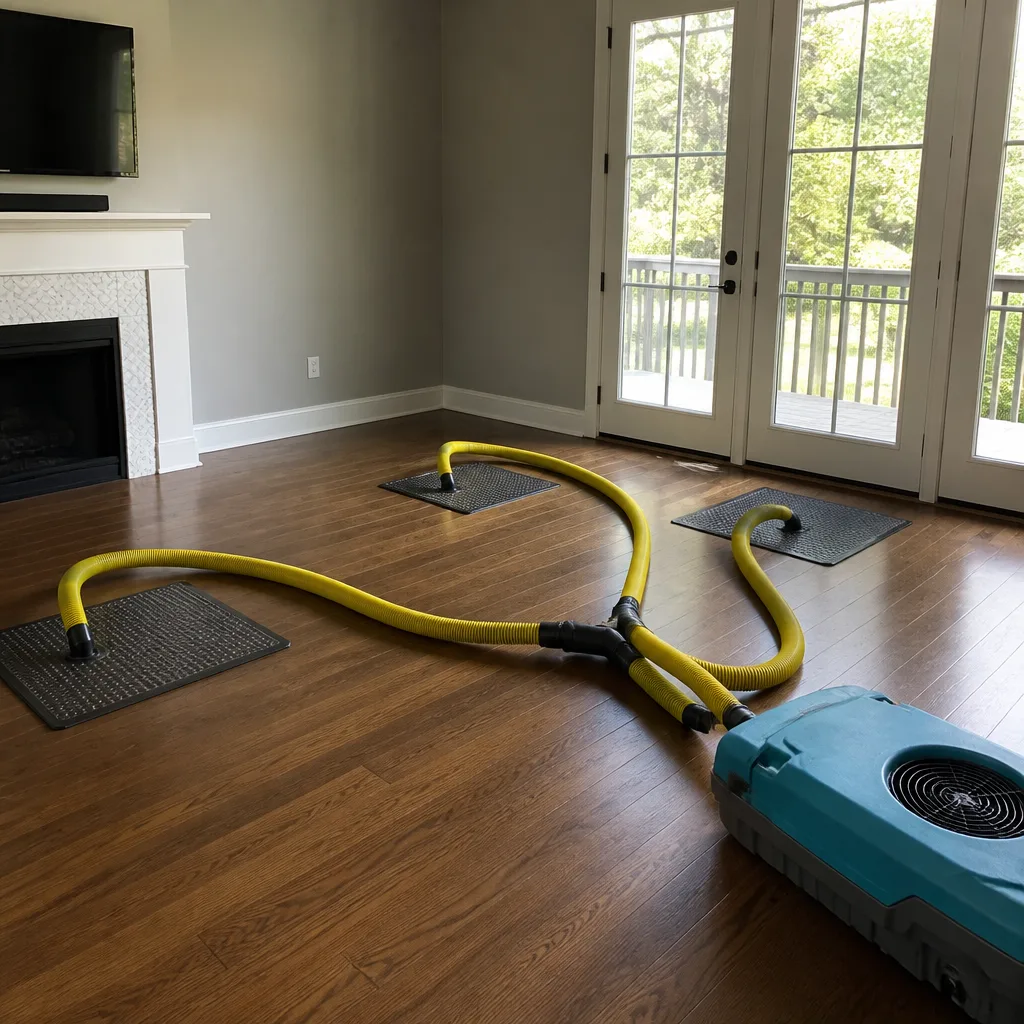 Water damage drying
 Fire & smoke cleanup
 Mold remediation
 Storm response
 Sewage cleanup
 Reconstruction
Free visual inspection and a written scope of work before any mitigation begins - photos, moisture readings, and drying logs go in your claim file
The scope we write is the scope we bill. Anything new gets shown to you, in writing, before we touch it.
Get your free estimateDamage Restoration Warning Signs: A Dallas Homeowner’s Reference Guide
A soft spot in the drywall, a door that suddenly won’t latch, and a water bill that crept up thirty dollars. Three Dallas homeowners reported those exact signs in the same week. Only one called before the mold was behind the walls. This guide exists because the warning signs of water, fire, and mold damage in Dallas homes aren’t subtle, they’re misread. Most people don’t know what a foundation crack that signals plumbing movement looks like versus one that’s cosmetic, or why a musty smell in August means something different than the same smell in February. By the end of this reference, you’ll know which signs demand a call today, which ones can wait 48 hours, and which ones are simply your house settling into the Dallas clay.
Quick Answer
The warning signs Dallas homeowners most often miss are active water stains with crisp edges, doors that stick only during dry months, HVAC condensation lines that drip when the system runs, and granule loss on shingle roofs after hail. If a stain is growing, a smell is getting stronger, or a water bill is rising without explanation, you have active moisture intrusion, not old damage. Keegan Restoration Dallas provides free estimates in Dallas, call (254) 857-5210.
Restoration work we handle
Table of Contents
- How to Tell Active Moisture from Old Staining
- Foundation Cracks and Dallas Clay: What Movement Actually Means
- Why That Musty Smell Means Different Things in August and February
- The Four HVAC Warning Signs That Precede Hidden Water Damage
- Post-Hail Warning Signs: Flat Roofs vs. Shingle Roofs
- The 48-Hour Call vs. Same-Day Emergency Decision Matrix
- Fire Damage Warning Signs Most Homeowners Overlook
- Mold Indicators That Appear Before Visible Growth
How to Tell Active Moisture from Old Staining
The most common mistake we see in Dallas homes is treating active moisture as old staining. A homeowner notices a tan ring on the ceiling, assumes it’s from a leak that was fixed years ago, and moves on. Two months later, that ring has grown two inches and the drywall is soft to the touch. The distinction between active and old staining comes down to three tests you can do without any special tools.
First, look at the edges. Old water stains have soft, feathered edges that blend into the surrounding paint. The water evaporated long ago, and the mineral deposits left behind have been slowly diffusing into the drywall for years. Active moisture creates stains with crisp, defined edges. The water is still present, still wicking outward, and the boundary between wet and dry is sharp. If the edge looks like a line on a topographical map, you have active moisture.
Second, check the surface temperature and texture. Place your palm flat against the stain. Active moisture makes drywall feel cool to the touch, even in a Dallas summer, because evaporating water pulls heat out of the surface. Old stains feel the same temperature as the surrounding wall. Active moisture also changes the texture. The paint may be slightly bubbled, the drywall may feel spongy under light finger pressure, or the surface may have a very fine roughness like sandpaper. Old stains are smooth and flat.
Third, watch the stain over a two-week period. Take a photo with your phone, mark the edges with a pencil, and check it again in 14 days. Active moisture changes. The stain grows, darkens, or develops satellite spots. Old staining stays exactly the same size and color. This is the simplest test of all, and it requires nothing more than patience and a pencil.
We also recommend a smell test in the immediate area. Active moisture that has been present for more than a few days produces a specific odor: damp, earthy, slightly sweet. It’s the smell of microbial activity starting. Old staining has no smell at all. If you catch a whiff of something organic when you stand close to a stain, the moisture is active and the clock is running on mold colonization. Our water damage restoration services in Dallas address active moisture before it reaches that point.
What Different Stain Colors Mean
- Tan or light brown: Clean water from a supply line or roof leak. This is the most common stain in Dallas homes and the easiest to remediate if caught early.
- Dark brown with a rust-colored center: Water that has passed through wood or metal, often from a long-running slow leak. The discoloration comes from tannins and iron oxide.
- Yellow or amber: Usually from a roof leak that has been active through multiple rain seasons. The color deepens as the water picks up more organic material from the roof deck.
- Gray or black with a sooty appearance: This is not water staining. It’s mold growth on the surface of the drywall, and it means moisture has been present for weeks or months.
Foundation Cracks and Dallas Clay: What Movement Actually Means
Dallas sits on expansive clay soil. That single fact explains more about foundation cracks, sticking doors, and drywall stress lines than any other variable. Clay soil expands when it absorbs water and contracts when it dries out. In a Dallas summer, the soil around your foundation can shrink enough to pull the foundation outward and downward. In a wet spring, the same soil swells and pushes the foundation upward and inward. This is normal. Most Dallas homes experience some seasonal foundation movement, and most of it is cosmetic.
The question is whether a crack indicates seasonal movement or something more serious: a plumbing leak that is continuously saturating the soil on one side of the foundation, creating differential movement. Here’s how to tell the difference.
Cracks that indicate normal seasonal movement are hairline cracks, less than 1/16 of an inch wide, that run vertically or diagonally for a few inches. They appear in drywall, not in brick or concrete. They open slightly during dry months and close during wet months. They tend to appear above doorways and windows, where the wall is already under stress from the opening. These cracks are cosmetic and require no action beyond monitoring.
Cracks that indicate possible plumbing issues are wider than 1/8 of an inch, run horizontally or in a stair-step pattern through masonry, or appear in the foundation concrete itself. A slab leak beneath a Dallas home creates a unique pattern: the soil on one side of the foundation stays saturated while the other side dries out normally. This creates differential movement, which shows up as diagonal cracks that start at one corner of a window and run toward the ceiling, or as cracks that appear on the same side of the house in multiple rooms. If you see cracking concentrated on one side of the home, especially the side where the water meter and main supply line enter, a slab leak is a real possibility.
Door behavior is another signal, but only in context. A door that sticks during the dry months of July and August, when the soil has contracted and the foundation is settling, is usually normal. A door that suddenly starts sticking in a specific room, with no change in the weather pattern, and is accompanied by a higher water bill, points to a leak that is changing the soil moisture on that side of the house. In our experience, the door is rarely the first sign. By the time a door won’t latch, the leak has typically been active for weeks.
Why That Musty Smell Means Different Things in August and February
Dallas has two distinct climate modes: hot and humid from May through October, and cooler and drier from November through April. A musty smell in a home means something different depending on which mode you’re in, and misreading the season is one of the most common mistakes homeowners make.
In August, a musty smell in a Dallas home most often points to HVAC condensation. The air conditioner is running constantly, the condensate drain line is producing gallons of water per day, and if that line is clogged or the drain pan is cracked, water is pooling somewhere it shouldn’t be. The evaporator coil sits in a dark, cool plenum. Add standing water, and you have perfect conditions for microbial growth. The musty smell in August is usually strongest near return air vents or supply registers, and it gets worse when the system runs.
In February, a musty smell in a Dallas home more often points to a slow plumbing leak. The air is drier, the HVAC system is running less, and condensation is not the main source of indoor moisture. A musty smell in winter, especially one strongest in a bathroom, kitchen, or laundry room, suggests a supply line that is weeping, a drain line that is leaking at a joint, or a toilet wax ring that has failed. The smell is concentrated near the source, and it gets stronger over time.
The seasonal distinction matters because it changes where you look first. The homeowner who smells must in August and assumes mold in the walls might actually have a simple condensate line clog that costs a few hundred dollars to fix. The homeowner who smells must in February and assumes it’s just “that time of year” might actually have a supply line leaking inside a wall cavity, where mold can colonize behind the baseboard before any visible sign appears. Our mold remediation in Dallas team has seen both scenarios enough times to know the seasonal pattern holds.
The Four HVAC Warning Signs That Precede Hidden Water Damage
Dallas HVAC systems produce water. Every hour the air conditioner runs, it pulls moisture from the air and sends it down a condensate line. When that system fails, the water goes somewhere else: into the drain pan, onto the ceiling below an attic unit, or into the ductwork itself. These are the four signs that come before visible water damage.
- The drip you can hear but not see. If you hear water dripping inside the air handler or the plenum when the system runs, but see no water at the drain line exit outside, the water is going somewhere it shouldn’t. Stand near the indoor unit and listen. A steady drip that stops when the system shuts off means the condensate is backing up or the pan is cracked.
- Rust on the drain pan or water stains on the air handler cabinet. The drain pan under an attic unit should be clean galvanized metal or plastic. Rust means water has been standing in the pan repeatedly. Water stains on the outside of the cabinet, especially near the seams, mean water has overflowed the pan at some point.
- Condensation on the outside of supply ducts. When insulated ducts lose their insulation value because the outer jacket is damaged, or when the duct is running through an unconditioned attic in August, condensation forms on the outside of the duct. That condensation drips onto the ceiling drywall below, creating a pattern of stains that appear in a line, following the duct run. If you see a line of ceiling stains in a hallway or bedroom, look up. The duct is sweating.
- A sudden rise in indoor humidity with no change in outdoor conditions. If your thermostat shows indoor humidity climbing beyond 60% while the system runs, the system is not removing moisture properly. The cause is either a frozen coil, a low refrigerant charge, or an airflow problem. All three create moisture issues downstream. A properly functioning Dallas AC system should hold indoor humidity between 45% and 55% even in August.
The reason these signs matter is that hidden HVAC moisture rarely stays hidden. It migrates into drywall, insulation, and framing. By the time a ceiling stain appears below an attic unit, the water has typically been present for days or weeks, and the repair has expanded beyond the HVAC system into drywall replacement and possible mold remediation. We run Dri-Eaz and Phoenix drying equipment on these jobs, and the pattern is consistent: the HVAC failed first, and the water damage followed.
Post-Hail Warning Signs: Flat Roofs vs. Shingle Roofs
Dallas gets hail. The storms roll through in the spring, and the damage they leave depends heavily on the roof type. A shingle roof shows hail damage in predictable ways: granule loss, bruising, and cracked shingles. A flat or low-slope roof hides damage much longer, and that’s the one that creates the worst water intrusion problems months after the storm.
Shingle roof warning signs after hail: Look in the gutters first. Granules collect in gutters and downspout elbows after a hail event, and a heavy accumulation of granules in the weeks following a storm is the surest sign of shingle damage. On the roof surface, look for bruising: circular or oval indentations where the hail impacted the shingle, often with a darker color where the granules were knocked away. Cracked shingles, especially along the edges and at the corners, are also common. These signs are visible from the ground with binoculars, and they’re documented in every insurance adjuster’s post-hail report.
Flat and low-slope roof warning signs after hail: A flat roof absorbs hail impact differently. The membrane, whether it’s TPO, EPDM, or modified bitumen, may show no visible surface damage even when the underlying insulation board is compromised. Hail can crack the insulation beneath the membrane without puncturing the membrane itself. The damage reveals itself weeks or months later as soft spots in the roof surface, ponding water that doesn’t drain after rain, or interior staining that appears with no obvious roof penetration. By the time a flat roof leak shows up as a ceiling stain in a Dallas commercial building or a mid-century modern home, the water has been working through the roof assembly for a long time.
The flat roof is the one that hides damage longest for a simple reason: the water has nowhere to go. On a sloped roof, water follows gravity down the deck and out the eaves. On a flat roof, water sits. It finds the lowest point, ponds, and slowly works into the membrane. If you own a flat-roof structure in Dallas, the post-hail inspection should include a moisture scan of the insulation, not just a visual check of the surface. Our Keegan Restoration Dallas home page covers the full scope of our restoration work, including roof-related water intrusion.
The 48-Hour Call vs. Same-Day Emergency Decision Matrix
Not every warning sign is an emergency. Some signs require a call within 48 hours. Others require a call right now. The distinction matters because it determines whether you’re dealing with active damage or preventing future damage. Here is the matrix we use with Dallas homeowners.
Same-Day Emergency: Call Immediately
- Standing water in the home. Any amount of standing water from a supply line break, a water heater failure, or a roof leak that is actively flowing. Water is causing structural damage by the hour.
- Water coming through a light fixture or electrical outlet. This is a shock and fire hazard in addition to a water problem. Shut off power at the breaker and call a professional.
- Active sewage backup. Water from a sewage line carries pathogens. This is a health hazard that requires professional extraction and disinfection, not just drying.
- A sagging ceiling with water pooling above it. The drywall has absorbed its limit and is about to fail. The water is going to come down, and it may take the ceiling with it.
- Any water source you cannot shut off. If you don’t know where the water is coming from or how to stop it, that’s an emergency.
48-Hour Call: Schedule Promptly
- A stain that is growing slowly. If the stain has increased in size over weeks, not hours, the leak is slow. You have time to schedule an inspection, but not unlimited time. Slow leaks become mold problems in Dallas’s warm climate faster than homeowners expect.
- Door sticking accompanied by a higher water bill. A slab leak can run for weeks before it causes visible damage. Document the symptoms, check the meter, and call for an inspection within two days.
- Musty smell with no visible source. If the smell is present but faint, and no staining is visible, schedule a moisture assessment. The smell is likely coming from a hidden source that needs professional equipment to locate.
- Mold visible on one small area, less than 10 square feet. Small mold patches can often be addressed before they spread, but they should be handled within days, not weeks. Our mold remediation experts in Dallas can assess the scope.
- Post-hail roof inspection. After a hail event, schedule the inspection before the next rain. The roofer or restoration contractor can document damage for your insurance claim before further water intrusion occurs.
Fire Damage Warning Signs Most Homeowners Overlook
Fire damage is the easiest to see when it’s large and the easiest to miss when it’s small. A kitchen grease fire that stayed contained to the stovetop seems like a one-time event, but the damage extends beyond the visible burn marks. These are the signs that a small fire caused more damage than the homeowner realizes.
Soot staining on walls and ceilings beyond the fire area. Smoke travels. It moves through the house the same way air moves, which means it follows the HVAC return path and moves up. Soot can deposit on walls in rooms that were never near the fire, and the deposits are often so light they look like ordinary dust. The difference: soot is greasy, sticky, and doesn’t wipe off with a dry cloth. If a room smells like smoke weeks after a small fire, soot is present in the walls and ceiling.
A smoke odor that gets stronger when the HVAC runs. Smoke particles lodge in ductwork, and every time the system cycles, it redistributes those particles through the house. If the odor intensifies when the system runs, the ducts need professional cleaning or replacement, not just the visible surfaces.
Yellowing of white or light-colored surfaces. Smoke residue oxidizes over time, turning white surfaces yellow or amber. This appears weeks or months after the fire, and it’s often mistaken for ordinary age or sunlight damage. If the yellowing is concentrated in rooms that share a HVAC return with the fire area, it’s smoke residue.
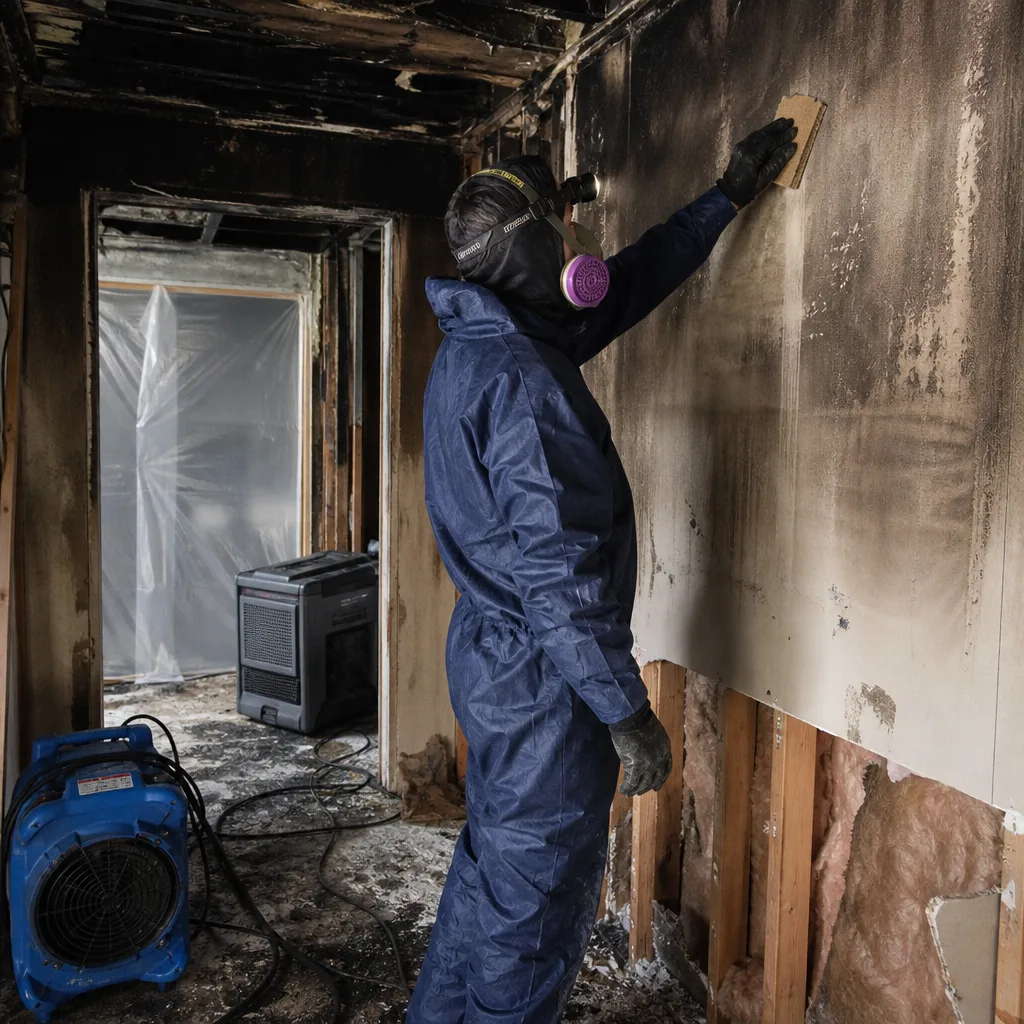
Our fire damage restoration in Dallas team uses professional-grade equipment from Dri-Eaz and follows IICRC standards for smoke and soot removal. The full scope of a fire job includes more than cleaning the burn area: it includes the surfaces the smoke touched.
Mold Indicators That Appear Before Visible Growth
By the time mold is visible on a surface, it has typically been growing behind that surface for days or weeks. The visible growth is the fruiting body, not the colony. Catching mold before it becomes visible requires reading the signs that precede it.
A persistent cough or congestion that improves when you leave the house. This is the most common health indicator, and it’s often the first sign a homeowner notices. If symptoms improve at work or on vacation and return when you come home, mold exposure is a possibility. Not every cough means mold, but the pattern of relief when away from home is a signal worth investigating.
A smell that comes and goes with humidity. Mold releases volatile organic compounds that are more detectable when the air is humid. In Dallas, the smell may be more noticeable after rain, in the morning when humidity is higher, or when the AC has been off and the house has warmed up. A musty smell that fluctuates with humidity points to mold in a location that is wicking moisture from the structure, not from a standing water source.
Staining on baseboards or the bottom edge of drywall. Water wicks upward through drywall, so the first visible sign of a slow leak inside a wall is often a stain at the baseboard or along the bottom foot of the wall. By the time that stain appears, the back side of the drywall has been wet for some time, and mold is likely present on the hidden surface.
A sudden increase in allergy symptoms in one room. If one room in the house consistently triggers symptoms while others don’t, that room has an environmental issue. Mold is a common cause, and the source is often in the wall cavity, floor, or ceiling adjacent to that room.
The pattern recognition here is straightforward: one sign alone might mean nothing. A cough could be dust. A faint smell could be a forgotten gym bag. But when two or three signs appear together, and they’re concentrated in one area of the house, the probability of hidden mold rises sharply. Keegan’s mold remediation in Dallas services start with a documented assessment, not a sales pitch. We document what we find, in writing, before any work begins.
Common Mistakes to Avoid
- Painting over a water stain without fixing the source. The stain bleeds through the paint within weeks, and in the meantime, the moisture behind the drywall has been breeding mold. Fix the source first, then repair the surface.
- Assuming a slab leak will fix itself. Slab leaks never resolve on their own. They get worse as the water erodes the soil around the pipe, which can accelerate foundation movement. A slow slab leak today is a foundation repair tomorrow.
- Using a household fan to dry a water event. Household fans move air but don’t control humidity. In Dallas’s climate, moving humid air around a wet room can spread mold spores while doing little to dry the structure. Professional drying uses dehumidification and controlled airflow for a reason.
- Ignoring a musty smell because it’s seasonal. Yes, the smell might be stronger in August. That doesn’t mean it’s harmless. Seasonal variation means the moisture source is active and responding to humidity changes, not that the problem is imaginary.
- Waiting to document damage before calling for help. You don’t need to understand the damage to call for an assessment. Waiting while you research can give the damage time to spread. Call first, document second, and let the professional explain what you’re seeing.
- Assuming a small fire means small damage. A stovetop fire that lasted 60 seconds can leave smoke residue throughout an entire floor of a house. The fire was small. The smoke damage may not be.
- Trusting a visual inspection of a flat roof after hail. Flat roof damage hides under the membrane. A visual check is not enough. If the roof is older than 10 years and hail was heavy, get a moisture scan.
See the difference
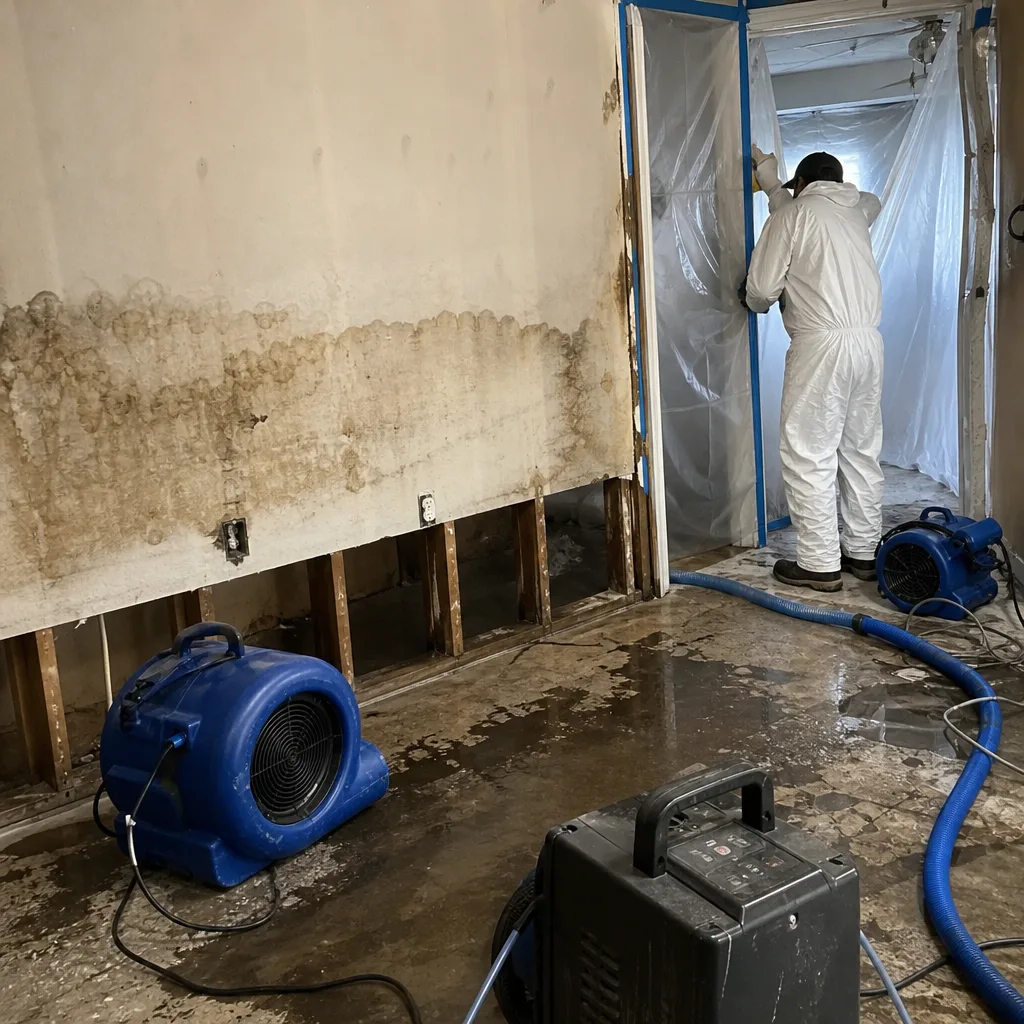 Before
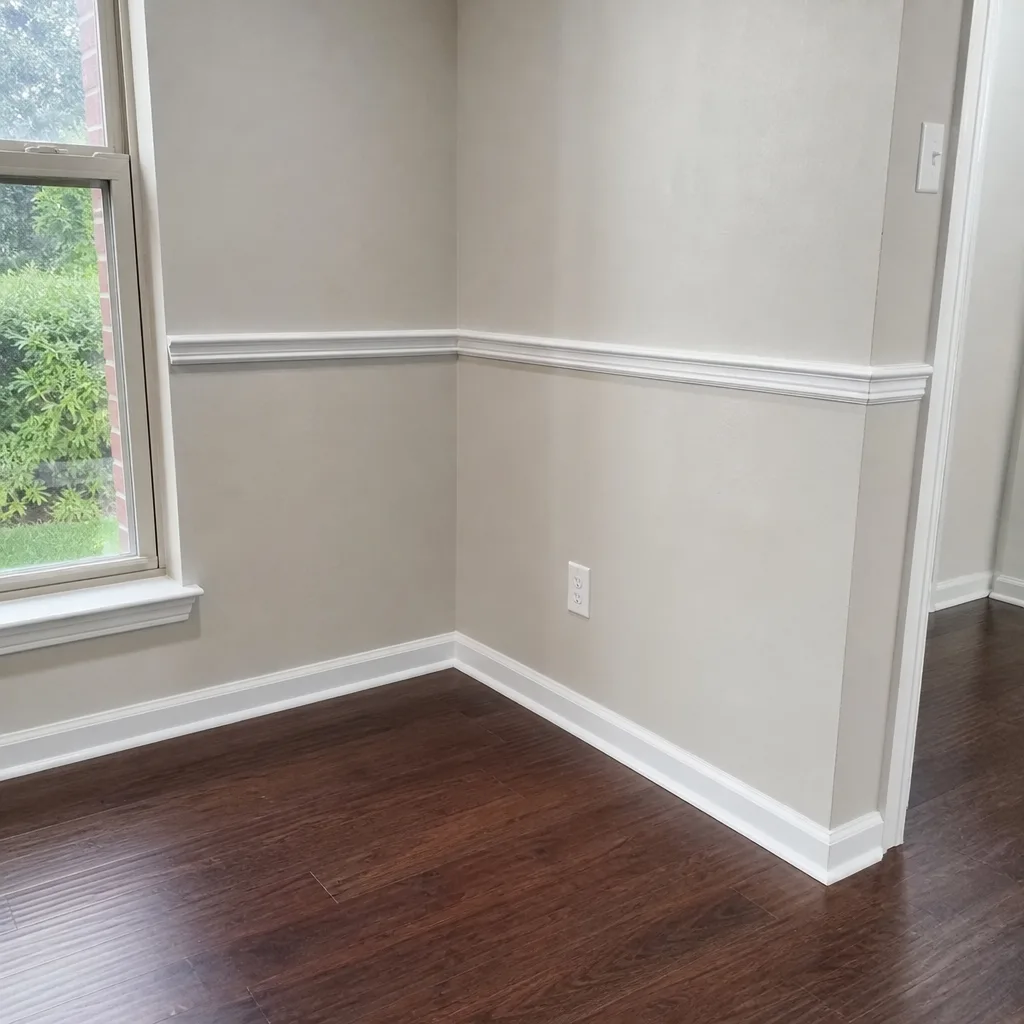 After
After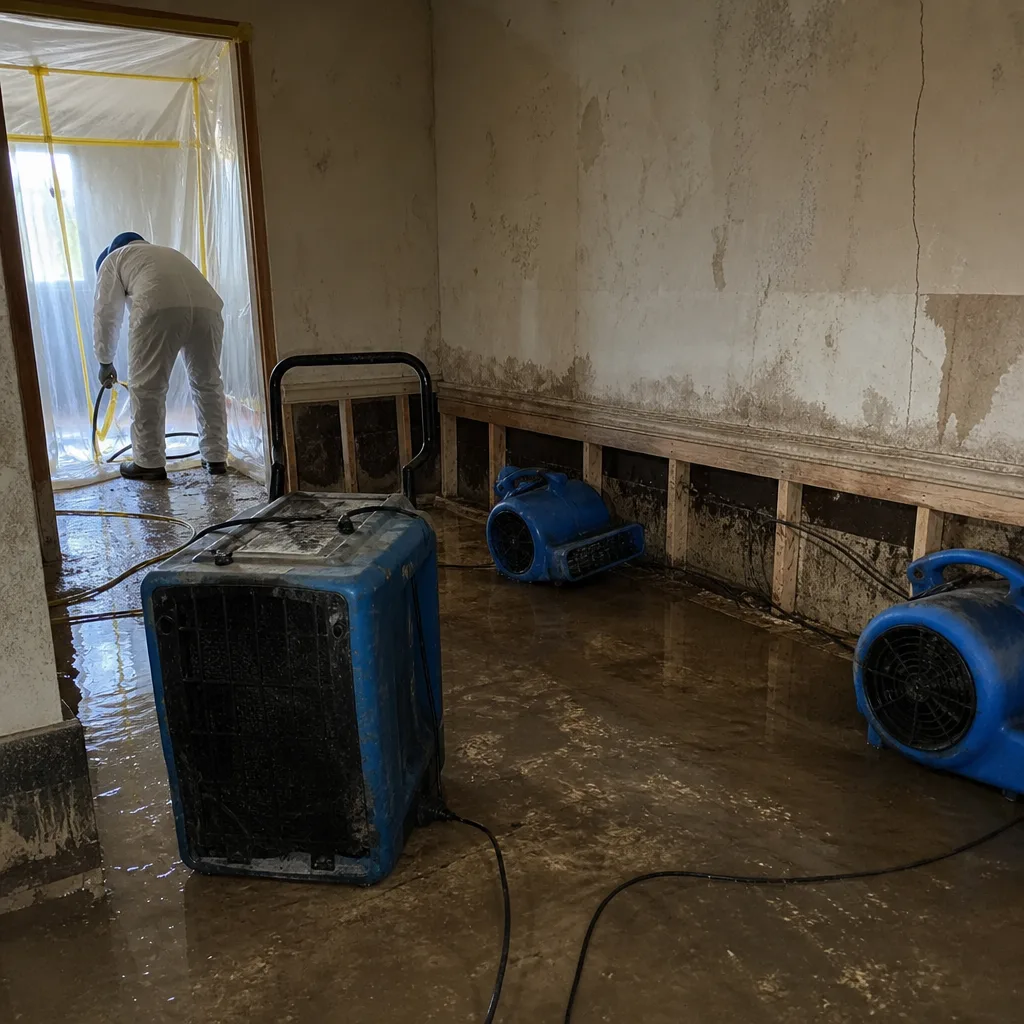 Before
 After
After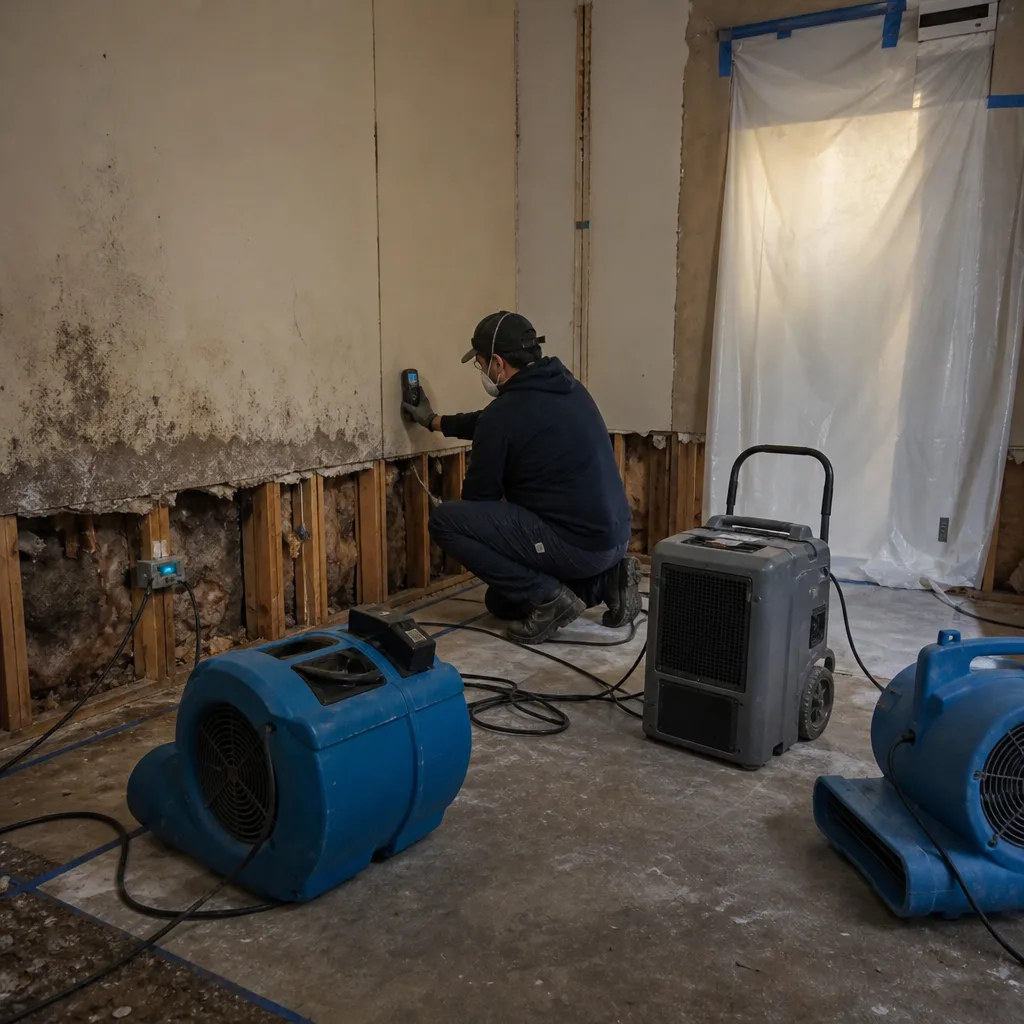 Before
 After
AfterWhen to Call a Professional
You should call a professional when a warning sign is active, persistent, or unexplained. A stain that grows, a smell that strengthens, a water bill that rises without explanation, or a door that sticks in a way it never did before: these are signals that something in your home is changing, and the change is not self-correcting. You should also call if you’re unsure whether a sign is active or old. A professional assessment settles that question with moisture meters and thermal imaging, not guesswork. Keegan Restoration Dallas offers free estimates in Dallas. Call (254) 857-5210, and a live person answers, any hour of any day. The written estimate is delivered before any work begins, on every job, no exceptions.
Frequently Asked Questions
An active water stain has crisp edges, feels cool to the touch, and changes over a two-week period. An old stain has feathered edges, feels the same temperature as the surrounding wall, and stays the same size indefinitely. Active stains also have a faint damp or earthy smell when you stand close to them.
A foundation crack from a plumbing leak typically appears as diagonal cracks concentrated on one side of the home, often near the water meter or supply line entry point. The cracks may be wider than 1/8 inch and may appear suddenly in multiple rooms on the same side of the house. Seasonal settlement cracks are hairline, vertical, and appear above doorways and windows.
In Dallas’s warm, humid climate, mold can begin colonizing within 24 to 48 hours of a water event. The rate depends on the temperature, the humidity level, and the surface material. This is why same-day extraction and drying matter: every hour of delay increases the probability of mold growth behind walls and under flooring.
No, but it is the most common cause in Dallas during the summer. The AC system produces gallons of condensate water daily, and any malfunction in the drain line or pan creates standing water in a dark, warm environment. If the smell is strongest near supply registers and increases when the system runs, HVAC condensation is the likely source.
Shut off the water source if you can find it, shut off power to any affected areas, move valuables and furniture out of the water path, and call a professional. Keegan Restoration Dallas is available 24/7 at (254) 857-5210. Document the damage with photos before any cleanup begins, as this documentation supports your insurance claim.
Most Dallas homeowners policies cover sudden and accidental water damage, such as a burst pipe, a water heater failure, or storm-related roof leaks. Gradual damage from a slow leak that has been running for months is often excluded. Every policy is different, and the best approach is to document everything thoroughly and work with a restoration contractor who formats their documentation to support insurance claims. Keegan Restoration Dallas documents every job this way.
The Bottom Line
The warning signs of damage in a Dallas home are knowable, readable, and routinely missed. Active stains have crisp edges and cool surfaces. Foundation cracks on one side of the house point to plumbing leaks, not just clay soil movement. A musty smell in August usually means HVAC condensation, while the same smell in February usually means a hidden plumbing leak. Flat roofs hide hail damage longer than shingle roofs, and the signs of mold show up in your sinuses before they show up on your walls. When you see a sign that is active, persistent, or unexplained, call (254) 857-5210. Keegan Restoration Dallas puts every price in writing before any work starts, runs to The Garrison Standard on every job, and backs every repair with the 365-Day Done Right Promise. The pattern recognition in this guide turns vague worry into a specific, actionable call.
Written by Shane Pruitt, Owner at Keegan Restoration Dallas, serving Dallas since 2005.