
Last updated October 16, 2026
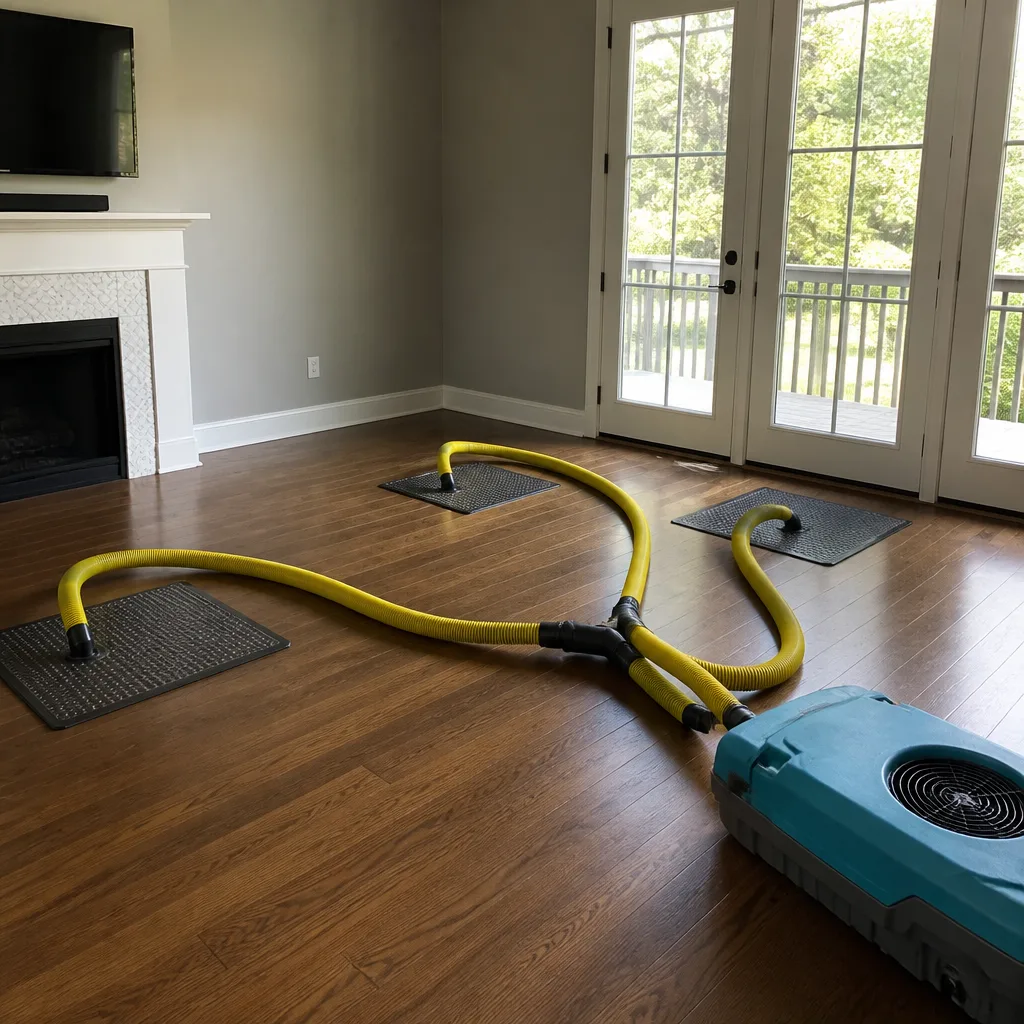 Water damage drying
 Fire & smoke cleanup
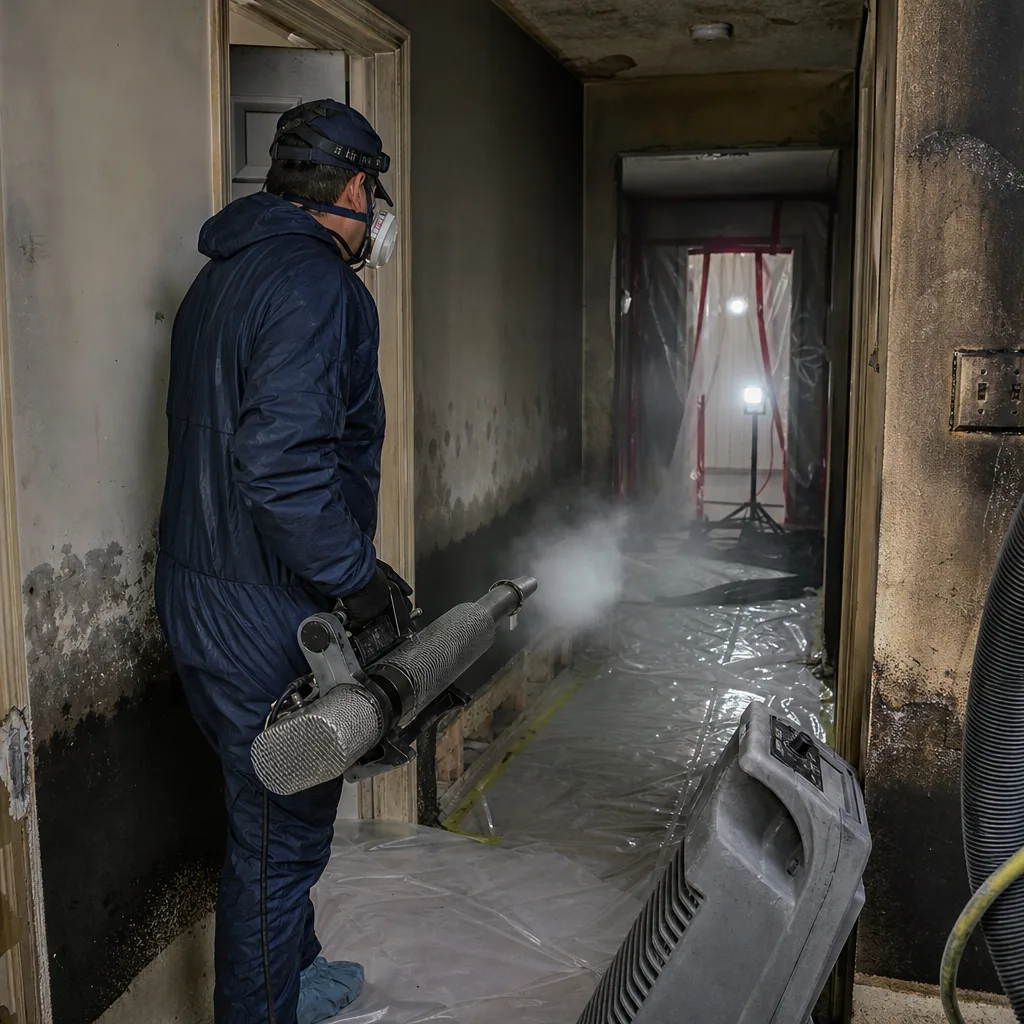
 Mold remediation
 Storm response
 Sewage cleanup
 Reconstruction
Free visual inspection and a written scope of work before any mitigation begins - photos, moisture readings, and drying logs go in your claim file
The scope we write is the scope we bill. Anything new gets shown to you, in writing, before we touch it.
Get your free estimateDIY vs Professional Damage Restoration: The Dallas Homeowner’s Decision Guide
A Dallas homeowner who rents a box-store air mover and dries visible water in 48 hours has done exactly what their insurance policy does not recognize as mitigation. When mold appears six weeks later behind that baseboard, the remediation cost belongs entirely to them: no adjuster support, no documentation trail, no covered claim. This guide draws the real line between work you can safely handle in Dallas and work that needs a technician who carries a moisture meter, knows what readings matter, and puts the scope in writing before anything gets touched.
Quick Answer
DIY restoration is reasonable for small, clean-water spills under roughly 10 square feet where you can verify the moisture is gone with a meter. anything beyond that, or any water that touched drywall, flooring, or cavities, belongs with a professional because hidden saturation, insurance documentation requirements, and secondary mold liability make DIY the more expensive option in Dallas.
Restoration work we handle
Table of Contents
- The Moisture Thresholds That Most Dallas Homeowners Never Check
- What Your Dallas Insurance Policy Actually Requires: ‘Prompt Mitigation’ Defined
- The Jobs Where DIY Is Reasonable (and Where It Is Not)
- What Dallas Contractors Actually Find Behind DIY-Dried Walls
- What Getting It Wrong Actually Costs in Dallas
- How to Get a Professional Assessment Without Committing to a Full Job
- The Equipment Gap: Why Rental Fans Are Not Mitigation
- Dallas Climate, Construction, and Code Factors That Change the Math
The Moisture Thresholds That Most Dallas Homeowners Never Check
A $40 pin-type moisture meter is the cheapest insurance policy available to a Dallas homeowner facing water damage, and almost nobody owns one. The readings it produces are the objective line between “this is dry” and “this looks dry but is actively growing mold inside the wall cavity.”
Here is the threshold framework that professional restoration crews in Dallas use to make the call:
- Under 8% moisture content in wood and drywall: structurally dry. No action needed.
- 8% to 13%: elevated. Air circulation and dehumidification may resolve it, but the area needs daily monitoring.
- 13% to 17%: actively wet. Mold colonization can begin within 48 to 72 hours. This requires professional-grade drying equipment, not a rental fan.
- Above 17%: saturated. Water has likely wicked into wall cavities, under flooring, and into structural framing. Extraction and controlled drying are non-negotiable.
The catch: a moisture meter only helps if you know where to probe. Water follows gravity first and capillary action second. A Dallas home with a slab foundation will hold water at the bottom plate of wall framing, where drywall contacts concrete, for weeks after the visible surface feels dry. A pier-and-beam home, common in older Dallas neighborhoods like Lakewood and Junius Heights, will channel water into the crawlspace where it stays invisible until floor joists begin to cup or rot.
In our experience, the homeowners who call after attempting DIY drying almost always have one thing in common: they never took a moisture reading anywhere except the spot where they saw the water. The meter reading at the visible spill told them 7%. The reading six inches inside the wall told a different story.
What Your Dallas Insurance Policy Actually Requires: ‘Prompt Mitigation’ Defined
Most Dallas homeowners policies include language requiring the policyholder to take “reasonable and prompt measures” to mitigate further damage after a loss. What the policy does not state explicitly, and what adjusters rarely volunteer, is that “reasonable and prompt” has a documentation standard attached to it.
When you hire a restoration company, you receive a scope of loss: a written document that records the affected areas, the equipment used, the moisture readings before and after drying, the hours of equipment runtime, and photographic documentation at every stage. That documentation is formatted to be submitted directly to your insurance carrier, and it demonstrates compliance with the policy’s mitigation requirement.
When you DIY the same response, your mitigation evidence might be a few cell-phone photos and a receipt from a rental counter. Here is what that creates:
- The adjuster has no moisture baseline. Without documented readings, there is no proof that the area was actually wet, actually dried, or dried completely.
- The claim is now contested from the weakest position. The carrier can argue that improper drying contributed to secondary damage, shifting liability to you.
- Secondary mold claims get denied. This is the big one. If mold appears 8 weeks after a DIY dry-out, the insurer will typically classify it as a failure of mitigation, not a continuation of the original covered loss. You own that remediation cost.
The practical translation: professional restoration in Dallas is often effectively free in the final accounting, because the deductible applies either way and the professional response preserves the long-term claim. The DIY response saves money on the front end and forfeits it on the back end.
The Jobs Where DIY Is Reasonable (and Where It Is Not)
The honest answer is not “never DIY.” The honest answer is that DIY works only when three conditions are all true, and the failure of any single one pushes the job into professional territory.
When DIY is reasonable:
- Category 1 water only (clean water from a supply line, sink overflow, or rainwater that has not touched the ground).
- Under 10 square feet of affected area, measured at the visible surface.
- Surface-only contact: water pooled on tile, sealed concrete, or vinyl flooring with no open seams, no drywall contact, and no penetration into wall cavities.
- You can verify dryness with a moisture meter, not by touch or appearance.
- The drying window is under 48 hours from first contact to verified dry.
When DIY is not reasonable:
- Category 2 water (washing machine discharge, dishwasher overflow, AC condensate that has sat) or Category 3 water (sewage, floodwater, outside ground water). Category 3 always requires professional handling for health reasons alone.
- Anything over 10 square feet. The surface area math on drying time compounds quickly, and rental equipment cannot keep pace.
- Any water that touched drywall, baseboards, cabinetry, or flooring with seams. Capillary action pulls water upward and outward into cavities. You cannot see most of the affected area.
- Any event involving electricity. Water near outlets, appliances, or a panel is a shock hazard first and a drying problem second.
- Any fire damage, even a small kitchen fire. Smoke and soot penetrate far beyond the visible burn area, and the residue is chemically active and health-relevant. Fire Damage Restoration in Dallas is a separate discipline from water work.
What Dallas Contractors Actually Find Behind DIY-Dried Walls
Every restoration company in Dallas keeps an informal file of the jobs they walk into that started as a homeowner’s weekend project. The recurring failures are consistent enough that we can list them plainly. This is not marketing; this is what the meter reads when a previous DIY dry-out is already six weeks old.
- The bottom 4 to 6 inches of drywall reads 22% moisture behind the baseboard that the homeowner never removed. The visible wall face reads 6%, so it “felt dry.” Mold is active inside the cavity.
- Laminate flooring looks fine until you pull a plank in the corner and find the subfloor dark, swollen, and actively colonizing. Laminate is a moisture barrier itself, trapping water beneath it for weeks.
- The homeowner used a rental fan and no dehumidifier. Moving Dallas air around is not drying; Dallas air in summer already carries high relative humidity. The fan circulated humid air over a wet surface for two days. The moisture content barely moved.
- The washing machine supply line leak in a second-floor utility room was “cleaned up” in an afternoon. Then the water that had run down inside the wall cavity reached the first-floor ceiling three days later, and the homeowner learned what a drain path looks like.
- The bathroom remodel that was already planned got a shortcut: the homeowner removed wet drywall, sprayed bleach on the framing, and closed the wall back up. Bleach kills surface spores but does not penetrate porous wood framing, and the moisture content at the sill plate never dropped below 20%. The mold returned through the new paint within two months.
These are not rare failures in Dallas. They are the standard outcome when drying is judged by feel instead of measurement.
What Getting It Wrong Actually Costs in Dallas
The financial comparison is the most useful piece of information a Dallas homeowner can have before deciding between a rental counter run and a professional evaluation. Here is the honest arithmetic, based on typical Dallas market pricing:
| Scenario | DIY Path | Professional Path |
|---|---|---|
| Small clean-water spill, under 10 sq ft, truly surface-only | $40-$80 for a moisture meter, own towels and fan. Reasonable. | $150-$300 for assessment and verification. Sometimes unnecessary. |
| Medium water event, 10-50 sq ft, drywall or flooring contact | $150-$250 for rental fans and dehumidifier. Then $2,500-$4,500 for mold remediation when hidden saturation colonizes. | $1,800-$3,500 for full extraction, drying, and documentation. Claim typically covers most of this. |
| Category 3 or sewage event, any size | Not safe or legal to handle without proper containment and disposal. Health liability sits with you. | $3,000-$7,000 depending on scope. Insurance covers the majority in most standard Dallas policies. |
| Small kitchen fire, contained but with smoke damage | Surface cleaning only. Smoke residue remains in HVAC, walls, and textiles. Odor returns. | $2,500-$6,000 for proper fire damage restoration, including odor and soot remediation. |
Note the pattern: the DIY path is cheaper only on the smallest, most controlled events. The moment hidden materials are involved, the DIY path produces the same restoration need plus a six-week delay, plus a denied secondary claim, plus a homeowner who now owns the entire remediation cost instead of a deductible.
How to Get a Professional Assessment Without Committing to a Full Job
This is the step most Dallas homeowners skip because they do not know it exists as an option. The assumption is that calling a restoration company means signing a contract for the full scope. It does not, if you call the right kind of company.
A legitimate Dallas restoration contractor will send a technician to assess the loss, take moisture readings, explain what they found in plain language, and give you a written scope with a price before any work begins. That is the standard. If a company will not do that, or if the price moves once the crew is inside the house, that is the signal to find a different company.
Here is what a proper assessment conversation in Dallas should include:
- A moisture map of the affected area, with readings you can see and ask about. Numbers, not adjectives like “damp” or “wet.”
- A classification of the water as Category 1, 2, or 3, explained in plain terms.
- A written scope of loss that lists what will be removed, what will be dried in place, what equipment will be used and for how long, and the total price.
- Documentation formatted for your insurance claim, including photos, readings, and the equipment log. Not a receipt; a claim-ready packet.
- No pressure to sign on the spot. The written scope is yours to review. A contractor who will not leave the scope without a signature is a contractor to avoid.
At Keegan Restoration Dallas, this assessment conversation is how every job begins. The price goes in writing before anything gets touched, and the written scope does not move at the door. That is the Garrison Standard, and it applies to every water, fire, and mold job we run.
The Equipment Gap: Why Rental Fans Are Not Mitigation
There is a reason professional restoration trailers in Dallas carry multiple brands of drying equipment, and it is not because one brand wins on every job. It is because professional drying is an engineered process, and the equipment works as a system.
A rental counter fan moves air. A professional drying setup manages three variables simultaneously:
- Airflow: high-volume air movers, typically from Dri-Eaz or Phoenix, positioned to create a controlled, directed pattern across wet surfaces.
- Dehumidification: refrigerant or desiccant dehumidifiers that actually remove water vapor from the air. In a Dallas August, ambient outdoor air carries more moisture than you want anywhere near a wet wall cavity. No dehumidifier means no drying.
- Containment and monitoring: barriers that isolate the drying chamber, plus daily moisture readings that track the drying curve and tell the technician when the equipment can be pulled.
The rental store will happily rent a homeowner a single air mover. The rental store will not explain that a single air mover without dehumidification equipment in a humid Dallas week will move wet air around and accomplish very little. That is not a malfunction; that is physics. Psychrometrics, the study of air and moisture behavior, is the discipline that determines drying time, and it is the discipline professional restoration technicians are trained in.
The equipment names are not the point. The point is that professional-grade drying is a system, and the system is what produces verifiable, documentable dryness that satisfies both the moisture meter and the insurance adjuster.
Dallas Climate, Construction, and Code Factors That Change the Math
Dallas is not a generic “anywhere in Texas” market for restoration work. Three local factors alter the DIY-versus-professional calculus in measurable ways.
The humidity problem
Dallas sits in a climate zone where summer outdoor humidity routinely exceeds 50% relative humidity, and spring storm seasons bring days of sustained high moisture. That means the “open the windows and let it air out” strategy, which might work in Phoenix or El Paso, does not work in Dallas. Opening windows introduces more moisture. Professional dehumidification is the only way to actually pull water out of the air inside the drying area.
The foundation and framing reality
Dallas residential construction is split between slab-on-grade foundations, which dominate newer builds in the northern suburbs, and pier-and-beam foundations, which are common in older neighborhoods like East Dallas, Oak Cliff, and parts of Richardson. Slab foundations hold water at the bottom plate of wall framing, where the drywall meets concrete. Pier-and-beam homes channel water into the crawlspace, where it can sit against floor joists for months without ever becoming visible from above. Both conditions require probing readings in specific structural locations, not a surface check.
The storm and freeze pattern
Dallas experiences both severe spring thunderstorms with flash flooding, and periodic winter freezes that burst pipes in homes not built for sustained cold. The February 2021 freeze produced thousands of pipe failures across the metroplex, and many of those failures were in homes that had never experienced water intrusion before. Homeowners in Dallas who have not dealt with water damage in the past cannot rely on previous experience to gauge severity; the conditions here produce failures that are new to them, and the first instinct is often to under-respond.
All three factors point the same direction: the conditions in Dallas make hidden moisture more likely, and make DIY drying less likely to succeed on the timeline required to prevent secondary damage.
Common Mistakes to Avoid
- Judging dryness by touch. Drywall and wood can feel dry to the hand at 15% moisture content, which is already in the mold-risk range. Use a meter or do not judge at all.
- Using bleach as a mold treatment on porous materials. Bleach does not penetrate wood framing, drywall, or grout. It is not a remediation method; it is a surface wipe with a smell.
- Running a rental fan without a dehumidifier in a Dallas summer. You are circulating humid air over a wet surface. The moisture will not leave; it will colonize.
- Waiting to see if mold appears before calling a professional. By the time mold is visible, the colonization is already established inside the material, and the remediation scope is significantly larger.
- Covering the affected area with flooring or drywall before verifying dryness. Closing a wall cavity that still reads 15% moisture is how repeat mold jobs are manufactured.
- Assuming insurance will cover secondary mold if the initial water claim was legitimate. Carriers routinely deny mold claims when the mitigation was not professionally documented. The homeowner’s own drying attempt can become the reason the follow-up claim fails.
- Under-reporting water category. “It’s just water” is not a category. Water from a dishwasher overflow that has sat overnight is Category 2. Water from outside ground flooding is Category 3. The category determines the health risk and the professional response.
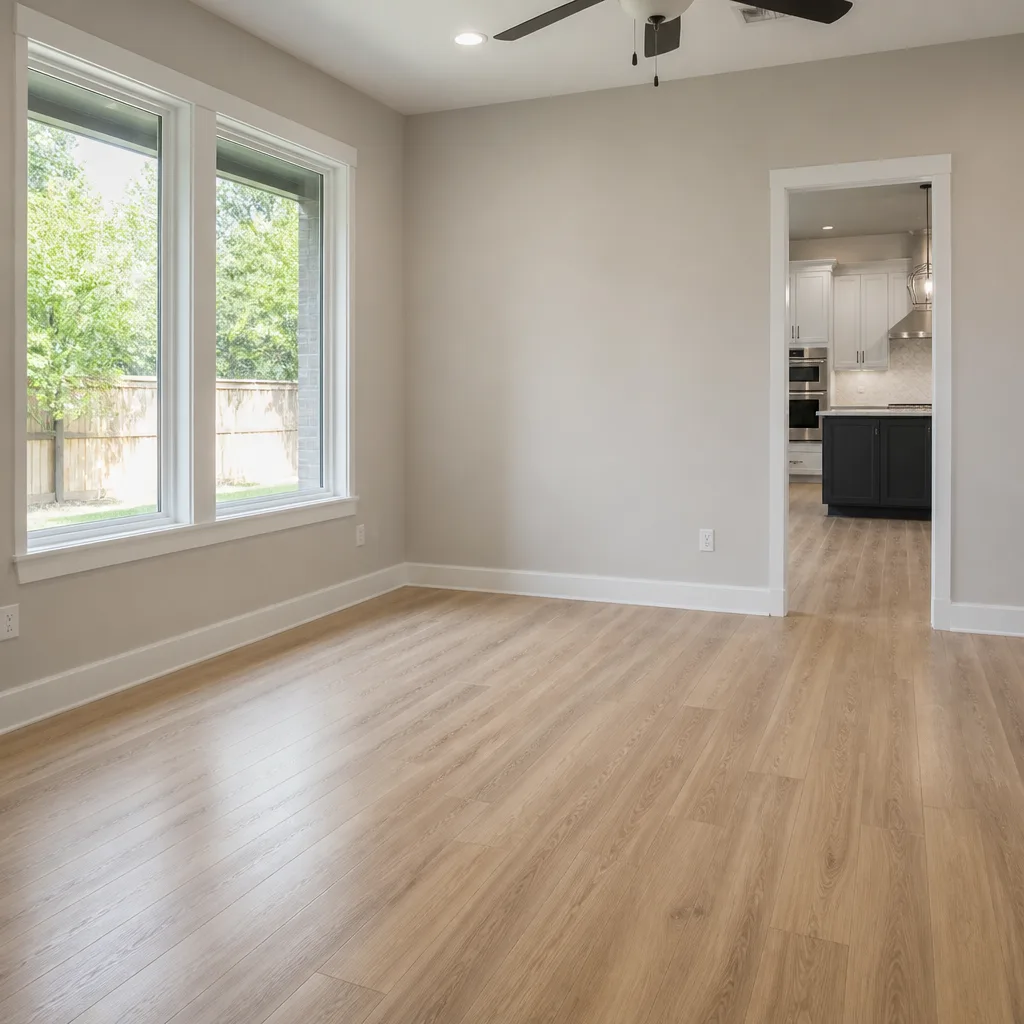
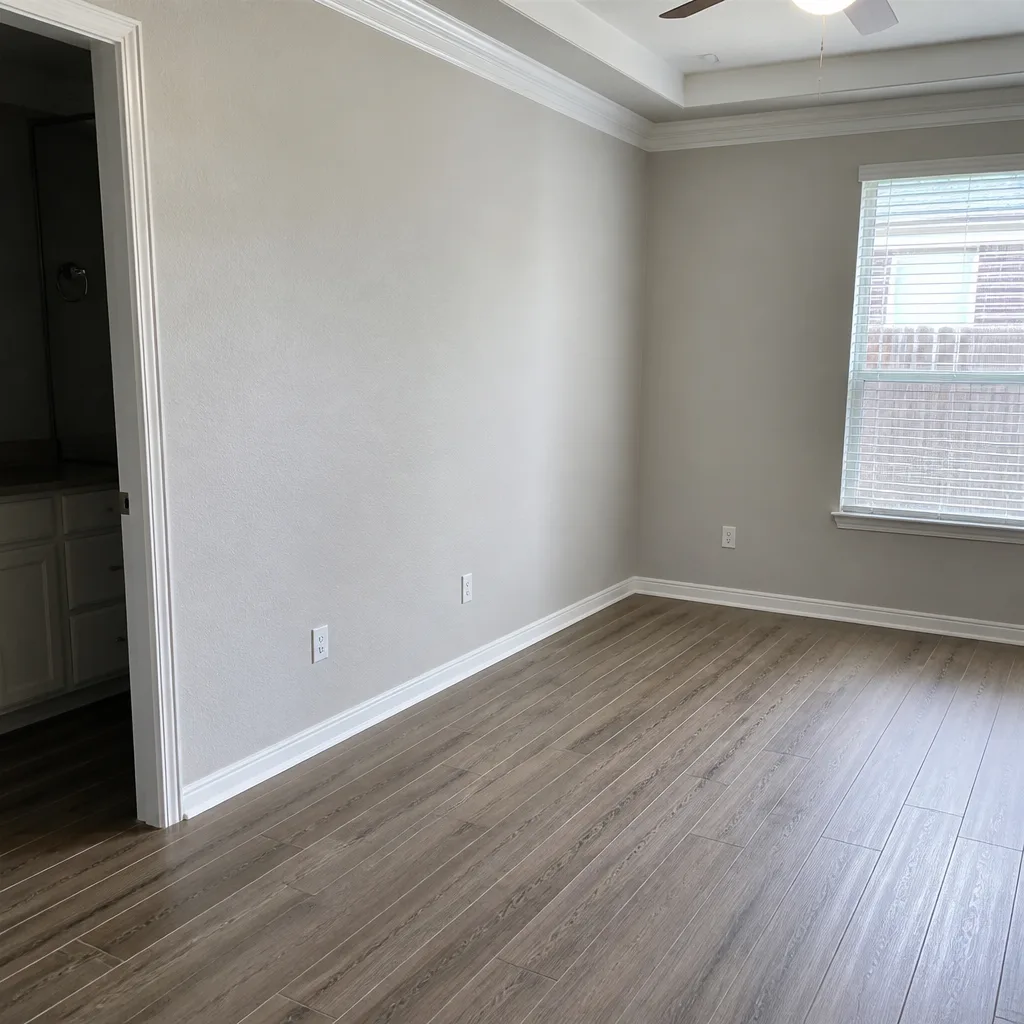
See the difference
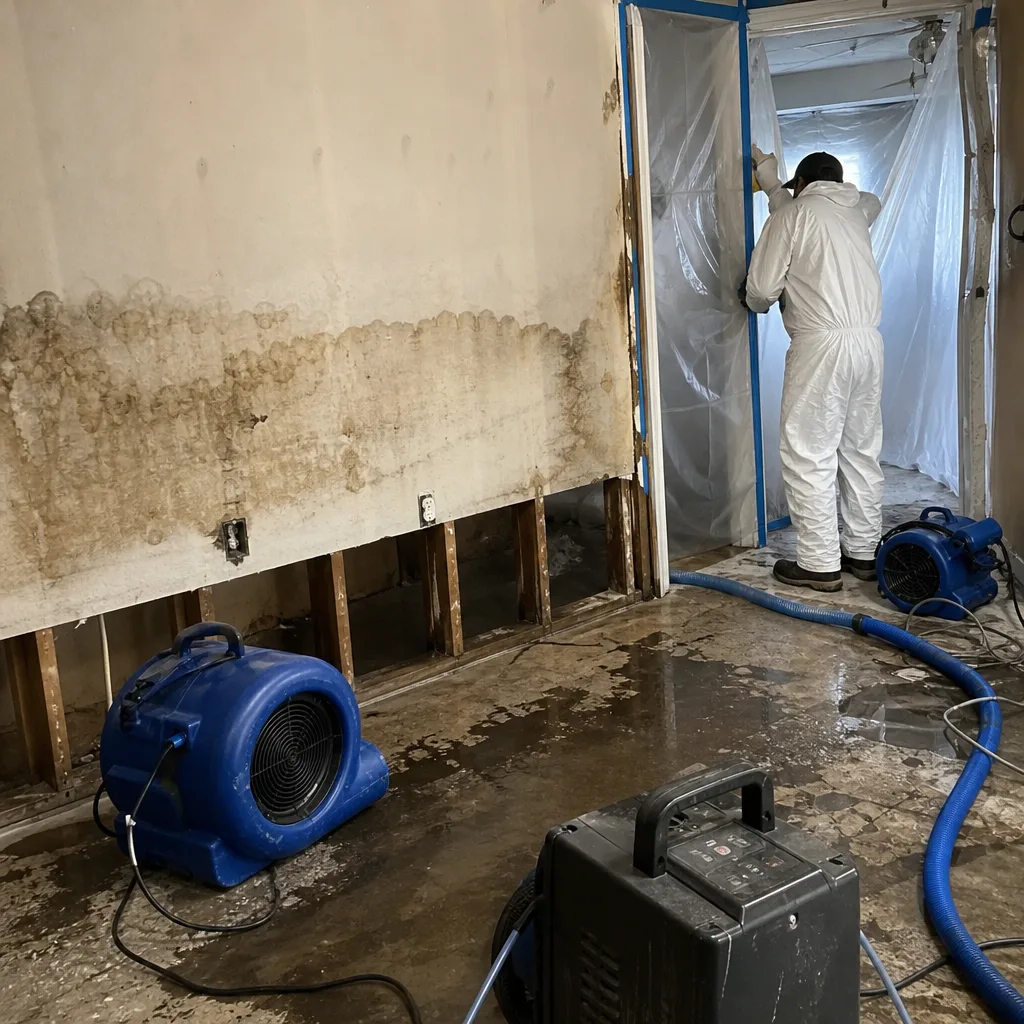 Before
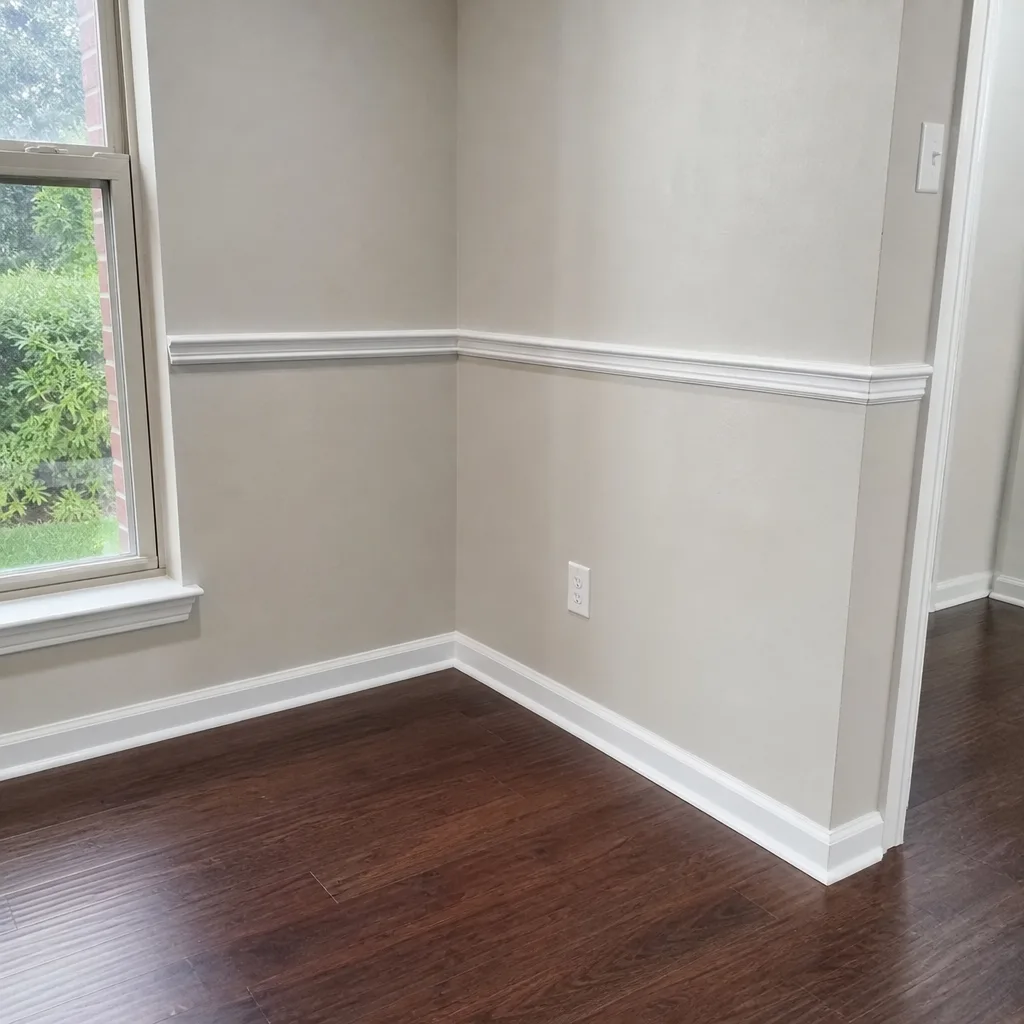 After
After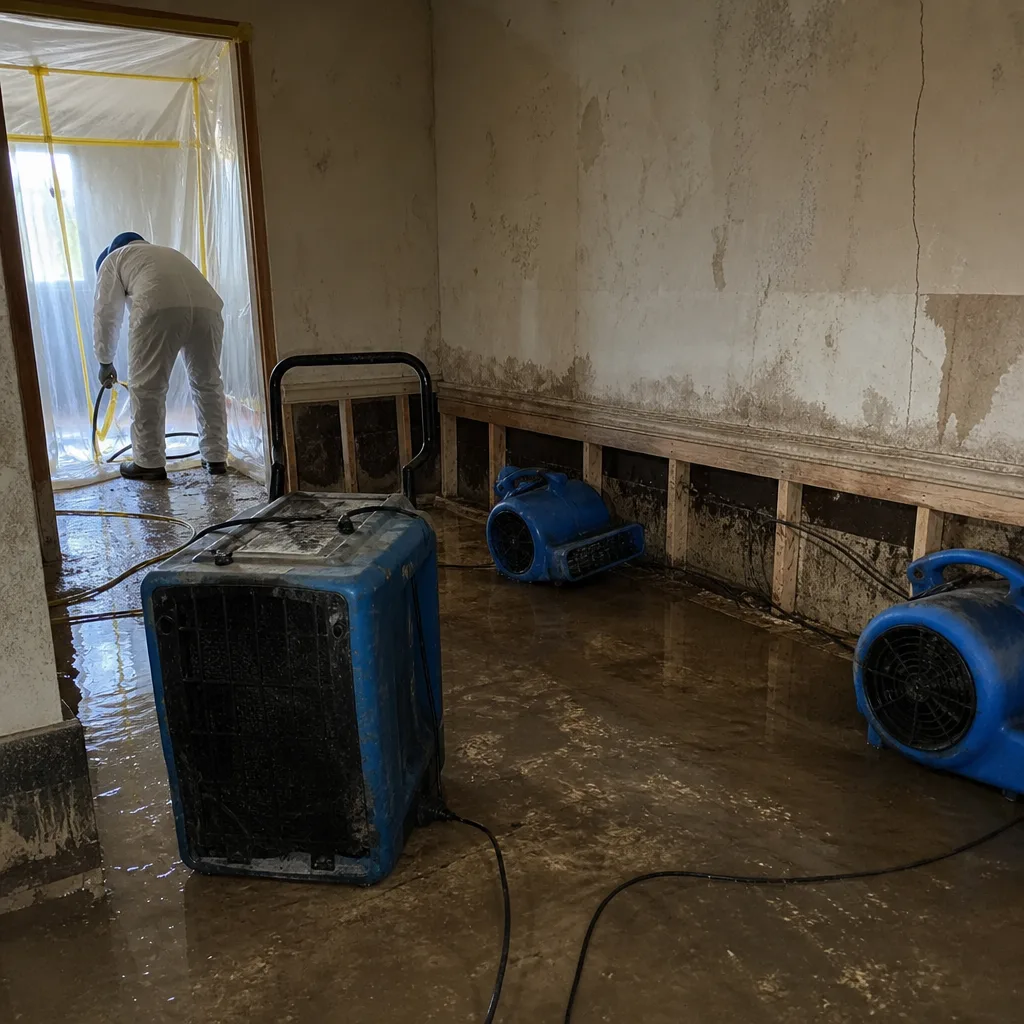 Before
 After
After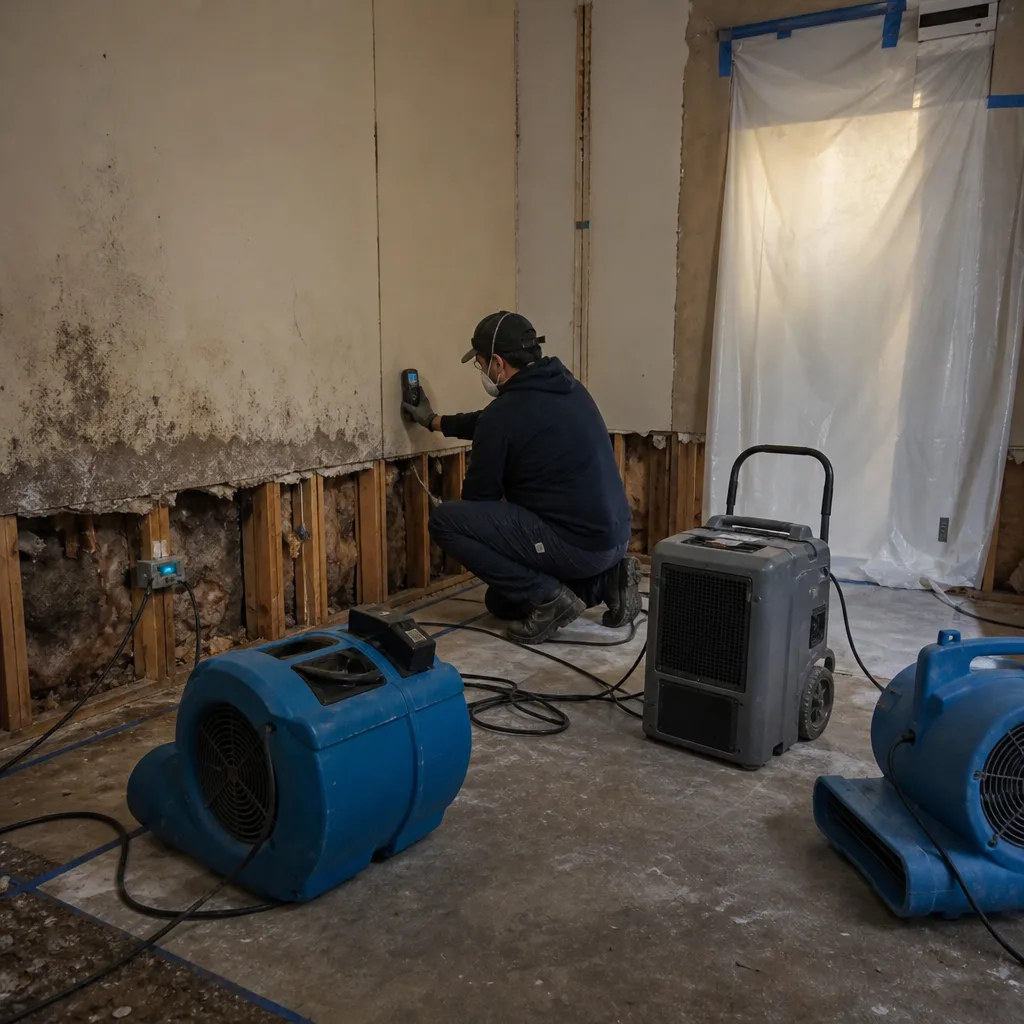 Before
 After
AfterWhen to Call a Professional
Call a professional when the water is anything other than clean and surface-only, when more than 10 square feet is affected, when drywall or flooring is touched, when the water category is 2 or 3, when electricity is involved, or when you cannot verify dryness with a meter. Also call a professional for any fire damage, regardless of how contained the fire seemed, because smoke penetrates far beyond the visible burn line. Water Damage Restoration in Dallas is the service page for water-specific questions, and Mold Remediation in Dallas covers what happens when mold has already appeared. Keegan Restoration Dallas offers free estimates in Dallas. Call (254) 857-5210 and a live person answers, 24 hours a day, including weekends and holidays.
Frequently Asked Questions
You can dry small, clean-water spills under 10 square feet yourself if you verify the moisture is gone with a meter and the water never touched drywall, flooring seams, or wall cavities. Anything larger, or any Category 2 or 3 water, requires professional water damage restoration to prevent hidden mold and to preserve your insurance claim.
Professional water damage restoration in Dallas typically ranges from $1,800 to $3,500 for a medium event affecting 10 to 50 square feet with drywall or flooring contact, and $3,000 to $7,000 for Category 3 water or sewage events. A small surface-only spill may run $150 to $300 for a documented assessment and verification. Call (254) 857-5210 for an exact quote; estimates are free.
Insurance covers the original water damage either way, but it will typically deny secondary mold or structural claims if the mitigation was not professionally documented. The policy requires prompt mitigation, and the carrier defines that as a response that meets industry standards and produces a verifiable drying record. A DIY attempt with no moisture readings, no documentation, and no professional scope of loss puts the secondary claim at risk.
A professional Dallas restoration company with 24-hour dispatch can typically arrive the same day you call, and a live person answers the phone at any hour. Keegan Restoration Dallas home runs 24/7 live dispatch because water actively damages a structure every hour it sits. Call (254) 857-5210 and a person answers, not a phone tree.
That depends on moisture readings in the materials, not on how the surface looks. If a meter shows drywall or framing at over 13% moisture, you need drying, not cleaning. A professional assessment with documented readings answers this question definitively, and at Keegan Restoration Dallas, the assessment always precedes any recommendation.
A professional restoration company should handle the documentation side of the claim. Keegan Restoration Dallas photographs every stage of the job, records moisture readings before and after, logs equipment runtime, and formats the documentation to support your claim directly with your adjuster. The homeowner should never be the one translating between a contractor and an insurance carrier.
The Bottom Line
The DIY-versus-professional decision in Dallas is not primarily about skill. It is about the hidden conditions that consumer equipment cannot detect, the documentation standard that insurance policies require, and the liability that lands on the homeowner when mitigation fails. Small, clean, surface-only spills are DIY territory if you meter them. Everything else is professional territory for reasons that have nothing to do with pride and everything to do with moisture physics, Dallas humidity, and the way insurance carriers evaluate undocumented mitigation. The cheapest mistake in Dallas restoration is renting a fan. The most expensive one is believing that a surface that feels dry means the problem is over. Water damage, fire damage, and mold each have their own discipline, and each carries failure costs that dwarf the price of a professional assessment. Keegan Restoration Dallas is part of the Garrison Partners family, running every job to the Garrison Standard since 2005: written price before work starts, background-checked uniformed technicians, professional-grade Dri-Eaz, Phoenix, XPOWER, and B-Air equipment, and the 365-Day Done Right Promise on every repair. Call (254) 857-5210 for a free estimate. A live person answers, 24/7.
Written by Shane Pruitt, Owner at Keegan Restoration Dallas, serving Dallas since 2005.