
Last updated October 16, 2026
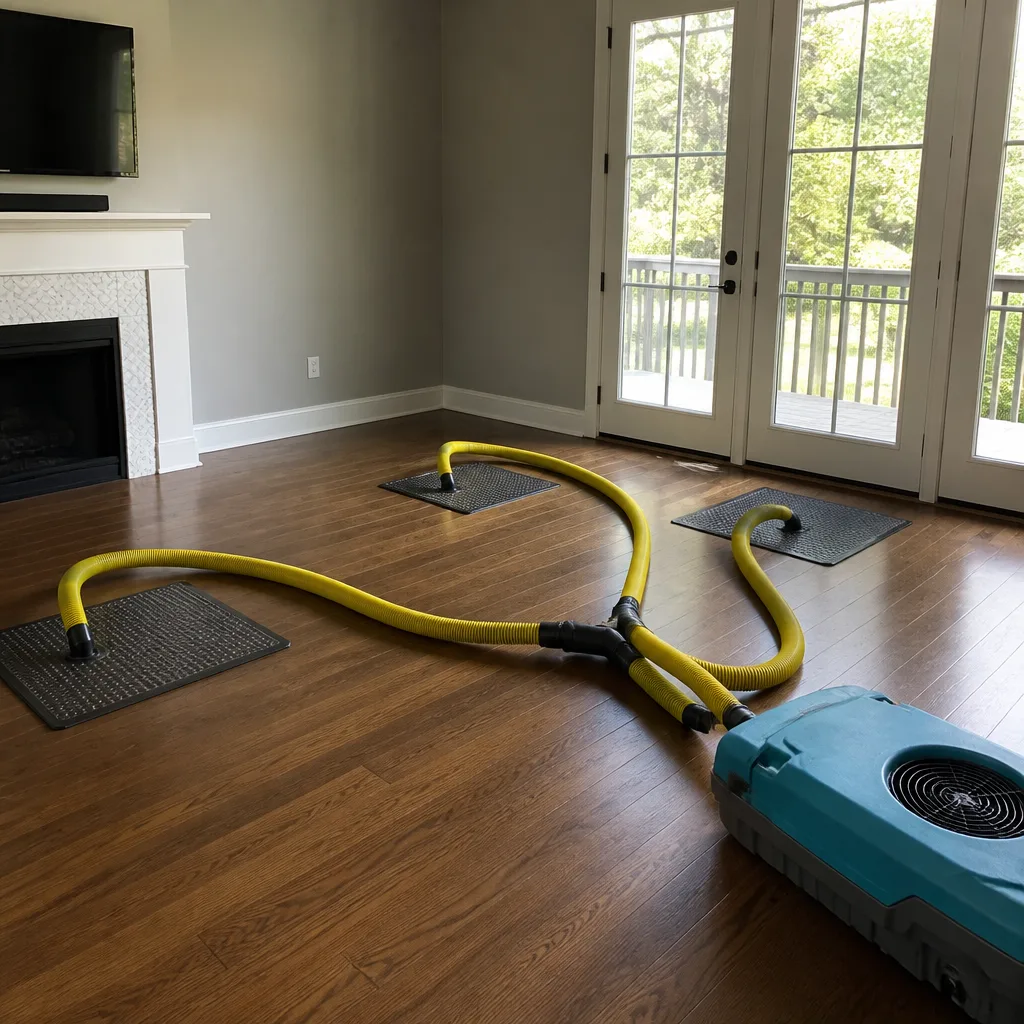 Water damage drying
 Fire & smoke cleanup
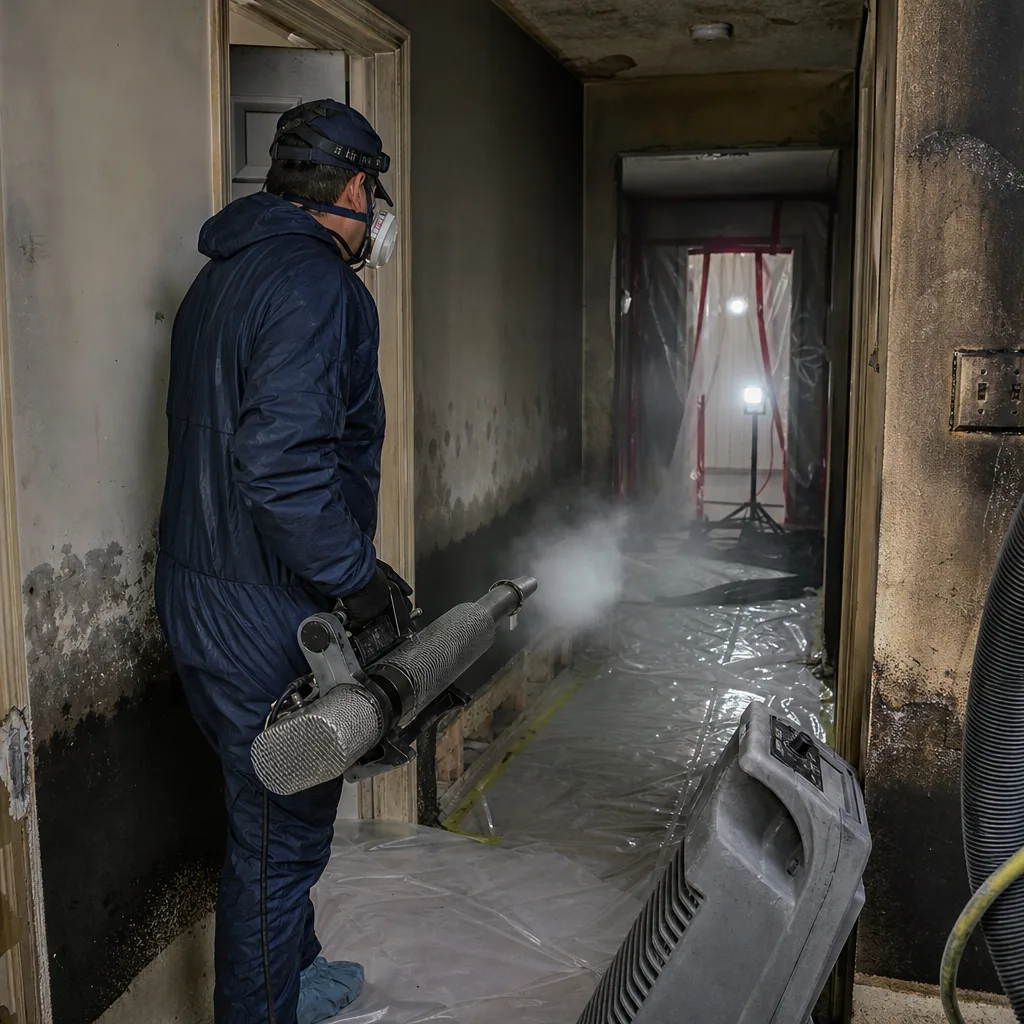
 Mold remediation
 Storm response
 Sewage cleanup
 Reconstruction
Free visual inspection and a written scope of work before any mitigation begins - photos, moisture readings, and drying logs go in your claim file
The scope we write is the scope we bill. Anything new gets shown to you, in writing, before we touch it.
Get your free estimateDamage Restoration Permits, Codes & Inspections in TX: What You Need to Know
In Texas, a contractor can legally begin mitigation work without a permit. That’s true, and it trips up more homeowners than any other fact in this industry. But the moment a wall is opened for reconstruction, a circuit is touched, or a structural member is cut to dry a ceiling cavity, different rules apply. Homeowners are the ones left holding the liability if those rules were ignored, and in Dallas that liability shows up in ways most people never expect: a stalled resale, a denied insurance claim, or a code enforcement letter that turns a finished repair into a demolition project. What follows is a practical map of which restoration scopes trigger a permit pull in Dallas, what happens when contractors skip that step, and the exact paperwork you should have in your file at job close.
Quick Answer
Water, fire, and mold mitigation work in Texas generally does not require a City of Dallas permit because it is classified as emergency response rather than construction. But reconstruction work, meaning drywall replacement, electrical repair, structural framing, or any work that touches plumbing or mechanical systems, does require permits and inspections. Homeowners who proceed without verifying permit status risk voiding their certificate of occupancy, complicating a future sale, and giving an insurer grounds to deny a claim. The rule is simple: ask your contractor which phase is mitigation and which phase is reconstruction, then get the permit number for the second one in writing.
Restoration work we handle
Table of Contents
- The Texas Code Landscape: Why Restoration Lives in a Gray Zone
- Which Dallas Restoration Tasks Actually Trigger a Permit
- Mitigation Certificate vs. Reconstruction Inspection: You Need Both
- How IICRC S500 Standards Interact with Dallas City Code
- What Happens When Unpermitted Work Surfaces During a Sale
- The Documentation File You Should Have at Job Close
- Common Mistakes to Avoid
- When to Call a Professional
- Frequently Asked Questions
The Texas Code Landscape: Why Restoration Lives in a Gray Zone
Texas does not have a single statewide building code. The state adopted its own Insurance Code and Water Damage Restoration rules that govern how insurers and contractors behave, but actual permitting authority sits with each municipality. Dallas operates under its own adopted codes, which pull from the International Residential Code and International Building Code with local amendments layered on top. That means a restoration job that requires a permit in Dallas may not require one in Garland, and a contractor who works both cities has to know the difference. The practical result is a two-tier system: emergency mitigation is treated as a health and safety response, while reconstruction is treated as construction. The line between the two is where disputes start.
One thing that surprises homeowners is that Texas does not license water damage restoration contractors as a trade. A plumber needs a license, an electrician needs a license, but a person with a truck and a wet vac can call themselves a restoration company. That absence of state licensing makes local permit compliance and third-party certification, like IICRC, the only real filters between a professional crew and a fly-by-night operation, which is why we also recommend reading our How to Hire a Damage Restoration Contractor in Dallas: A Step-by-Step Guide. We tell every Dallas homeowner the same thing: if your contractor cannot tell you, in plain language, whether the next phase of work requires a permit, you are talking to the wrong contractor.
For residential properties in Dallas, the critical distinction is whether the work changes the structure, the electrical system, the plumbing, or the building envelope. Drying a wet carpet does not. Replacing a water-damaged section of wall that requires cutting out and reinstalling drywall, insulation, and possibly studs does require a permit in most circumstances. The scale matter less than the nature of the work. The City of Dallas building inspection department treats a reconstruction permit as the trigger for inspections, and those inspections are what protect you when a future problem surfaces.
Which Dallas Restoration Tasks Actually Trigger a Permit
If a task is classified as mitigation, meaning the removal of water, the drying of materials, or the containment of mold, a permit is not required. That work is governed by the industry standard IICRC S500 for water damage and S520 for mold remediation. Texas law and Dallas code treat emergency response as something that should happen immediately and not wait for a permit desk to open on Monday morning. A homeowner with a burst pipe on a Saturday night does not need to wait for the city to issue a permit before a technician starts extracting water. That is the system working as intended.
The permit trigger is reconstruction. Here are the specific tasks in a Dallas restoration job that require a permit from the City of Dallas:
- Drywall replacement beyond a patch: If the repair involves removing and replacing more than a small section of drywall, especially if framing is exposed or altered, a building permit is required. A patch job under a certain square footage, often around 16 square feet, may be exempt, but full wall or ceiling replacement typically needs a permit.
- Electrical work: Any repair to wiring, outlets, switches, or panels damaged by water or fire requires an electrical permit and a licensed electrician. Water and electricity do not mix, and the City of Dallas inspects this work before the wall is closed.
- Plumbing work: Replacing water-damaged pipes, supply lines, or drain lines requires a plumbing permit. A restoration crew that cuts out a section of copper and installs PEX without a permit has just created a liability for the homeowner that an insurer can point to later.
- Structural alterations: If drying required cutting access holes into floor joists, ceiling rafters, or load-bearing framing, or if fire damage compromised any structural member, a permit and an engineer’s review may be required. In Dallas, structural permits trigger the highest level of scrutiny.
- HVAC duct replacement: Water or soot damage to ductwork often requires replacement, and that replacement typically requires a mechanical permit. An unpermitted duct replacement can depressurize a home and create long-term indoor air quality issues.
We have seen this exact scenario play out in Dallas neighborhoods like Lake Highlands and Preston Hollow: the mitigation phase is done correctly and quickly, only for the reconstruction to be handled without permits because the contractor was trying to keep the invoice low. The homeowner finds out two years later when they sell, and the cost to remediate the situation retroactively is three times what the permit would have cost. The money saved up front is never worth the liability carried forward. Our team at Keegan Restoration Dallas home follows the rule that has served homeowners well for two decades: if reconstruction is happening, the permit is pulled before the first sheet of drywall goes up.
Mitigation Certificate vs. Reconstruction Inspection: You Need Both
Most Dallas homeowners who have been through a restoration project end up with a final invoice and a receipt. That is not enough. What you actually need in your file are two distinct documents: a mitigation certificate, sometimes called a drying certificate, and a final reconstruction inspection sign-off from the City of Dallas. These are not the same thing, and neither substitutes for the other.
A mitigation certificate is issued by the restoration contractor, or in some cases by a third-party inspector, and documents that the structure reached a target moisture content consistent with the IICRC S500 standard. It records the drying equipment used, the daily moisture readings, and the final verification. Think of it as the proof that the problem is actually solved, not just visually hidden. A reputable company will provide this without being asked. If a contractor balks at producing one, you have your answer about the quality of the work.
The reconstruction inspection is issued by the City of Dallas and verifies compliance with the building code. It is the legal approval that the new drywall, the repaired electrical work, and the replaced plumbing were installed correctly. Here is what a complete file looks like at the end of a Dallas restoration project:
- Initial permit application: The permit number, the scope of work described, and the date it was issued.
- Inspection records: The city’s sign-off, typically covering framing, electrical, plumbing, and final, depending on the scope.
- Mitigation certificate: The contractor’s documentation of drying progress and final moisture readings.
- Scope of loss document: The written description of what was damaged, what was done, and what was replaced, formatted to support an insurance claim.
- Photo documentation: Before, during, and after images that establish the condition of the property at every phase.
We treat this checklist as part of The Garrison Standard on every water, fire, and mold job. The written price comes before any work starts, and the written documentation comes before any equipment leaves the driveway. A homeowner should never have to chase down paperwork that should have been handed over at job close.
How IICRC S500 Standards Interact with Dallas City Code
The IICRC S500 is the standard reference for professional water damage restoration. It covers everything from extraction techniques to psychrometrics, the science of measuring and controlling moisture in air and materials. Dallas city code does not require a permit for work that is purely drying, but it does require that any reconstruction work that follows meets the building code. The interaction is straightforward: IICRC ensures the structure is dry enough to rebuild, and the city code ensures the rebuild is done correctly.
Where the two standards meet is in the structural drying calculation. IICRC S500 requires that drying equipment be sized to the class of water loss and the cubic footage of the affected space. A Dallas contractor running desiccant drying equipment from a brand like Injectidry in a 400-square-foot living room needs to document daily moisture readings and prove the materials reached their dry standard. If they dry too fast and skip readings, you get trapped moisture and mold behind new drywall. If they dry too slow, you get secondary damage to flooring and framing. The city inspection plays no role in the drying phase, which is why the contractor’s own adherence to IICRC matters so much.
Third-party inspection is not automatically required in Dallas on every job, but it becomes necessary in specific situations. A large loss that triggers a structural permit may require an engineer’s evaluation. A fire loss that compromised load-bearing members always requires engineering input before reconstruction begins. And an insurance company with a large exposure may send its own adjuster or third-party reviewer. A restoration contractor who bristles at third-party involvement is waving a red flag. We work alongside adjusters and third-party reviewers on Dallas jobs regularly; the documentation simply speaks for itself.
Professional-grade equipment matters here in ways that are not just marketing talk. We run drying setups built on Dri-Eaz and Phoenix air movers and dehumidifiers, with XPOWER and B-Air units deployed depending on the class of water loss and the size of the affected space. Injectidry systems handle the hard-to-dry cavities, like wall interiors and under-cabinet spaces, without opening more of the structure than necessary. The equipment choice is driven by the psychrometric math, and the math is what makes an IICRC-compliant drying job defensible to a code inspector or an insurance adjuster.
What Happens When Unpermitted Work Surfaces During a Sale
The most common way unpermitted restoration work gets discovered is not a nosy neighbor calling code enforcement. It is the home inspection during a sale. A Dallas buyer hires an inspector, the inspector notices that the electrical panel has a new feeder with no corresponding permit on file with the City of Dallas, or the seller’s disclosure form, which in Texas requires disclosure of known defects and unpermitted work, turns up a restoration job from two years ago that never received final inspection. At that moment, the sale pauses.
The cost of retroactive permitting in Dallas is not trivial. Here is what typically happens:
- The city requires the work to be exposed: If electrical, plumbing, or framing work was hidden behind new drywall without inspection, the inspector may require that the work be opened up for review. That means demolition of finished work.
- The homeowner pays double for the repair: First for the original unpermitted work, then for the opening, the re-inspection, and the re-closing. On a large water restoration, that can add $3,000 to $8,000 to what was already paid.
- The insurance company may take a position: If a future claim arises from the same area, say a subsequent leak in the same wall cavity, the insurer can argue the unpermitted work contributed to the damage and deny or reduce the claim.
- Lender requirements stall the closing: FHA, VA, and some conventional loans require that the property have no known code violations or unpermitted work before funding.
The seller disclosure form in Texas, known as the Seller’s Disclosure Notice, asks specifically about structural repairs, electrical work, and any work done without a required permit. A seller who checks “no” when the truth is “yes” is exposed to legal liability from the buyer after closing. We tell Dallas sellers the same thing we tell buyers: pull the permit history before you list the house. The City of Dallas provides an online permit search that takes five minutes and can prevent a six-figure transaction from collapsing over a $400 permit.
The Documentation File You Should Have at Job Close
Restoration is one of the only trades where the quality of the finished product can be invisible. New paint covers old problems. New carpet hides what was underneath. That is why documentation is not a nice-to-have; it is the proof that the work was done to code and to standard, and it is the only thing that protects you if the repair fails or an insurer asks questions.
At a minimum, we recommend every Dallas homeowner leave a restoration project with the following:
- Written scope of loss: A document that describes the cause of the loss, the affected areas, the materials removed, and the work performed. This is the single most important document for an insurance claim.
- Permit numbers and inspection sign-offs: If any construction work was performed, the City of Dallas permit numbers and the inspector’s final approval should be in your file.
- Drying log: Daily moisture readings showing the progression from wet to dry, demonstrating that the structure reached IICRC S500 dry standards.
- Equipment list: The type and number of air movers, dehumidifiers, and other drying equipment used, which helps justify the cost to an insurer and proves the job was sized correctly.
- Photo documentation: Before, during, and after photos of every affected area, including the hidden spaces: wall cavities, under stairs, beneath flooring.
- Written guarantee: A clear, written statement of what is covered, for how long, and what happens if the repair fails.
That last item matters more than most people realize. Our 365-Day Done Right Promise is written into every Dallas job: if a repair fails within one year, the crew returns and makes it right at no charge. Not a pro-rated credit, not a phone tag game with a manager, a written guarantee. The reason we put it in writing is the same reason we put the price in writing before work starts: a homeowner should never be the one holding a verbal promise when the drywall is already closed.
We also format every job file so it works as a clean insurance claim package. The scope of loss, the drying log, the photos, and the permit sign-offs all get assembled into a document you can forward to your adjuster. Direct insurance billing coordination is part of how we work in Dallas, and a well-documented file is the difference between a claim that gets paid promptly and one that gets picked apart over missing details.
Common Mistakes to Avoid
- Assuming the contractor’s “general liability insurance” covers permit compliance. It does not. Liability insurance protects the contractor if the work causes damage; it does not protect the homeowner if the work was done without a required permit and later fails or is discovered during a sale.
- Accepting a low bid without asking what it excludes. In Dallas, a low restoration bid often excludes the permit fees, the inspection costs, and the reconstruction work that the homeowner assumes is included. Then the price moves once the wall is open, which is exactly the behavior the written-scope discipline prevents.
- Letting the contractor close the wall before the inspection. Once drywall covers the electrical, plumbing, or framing work, the inspector cannot see it, and the contractor has to open the wall back up. A disciplined contractor schedules the inspection before the closure, every time.
- Treating mold remediation as a simple cleaning. Mold remediation that involves containment, removal of affected materials, and air scrubbing is a different level of work than surface cleaning. If the moisture source is not eliminated and the drying is not verified, the mold returns, and the second remediation is on you.
- Not saving the documentation file. The most common regret we hear from Dallas homeowners is that they have the invoice but not the permit, the drying log, or the guarantee. Years later, when a sale or a new insurance claim requires proof, the documentation is gone.
- Handling the insurance conversation without documentation. An insurer will ask for evidence: what was damaged, how it was dried, what was replaced, and whether permits were pulled. A contractor who provides a clean file makes the adjuster’s job easy; a contractor who provides nothing makes the homeowner’s claim harder.
When to Call a Professional
Any restoration situation that involves opening walls, touching electrical systems, repairing plumbing lines, or addressing mold contamination behind finished surfaces is a job for a professional crew, not a handyman and not a weekend project. The liability alone justifies the call. But the practical reasons matter too: a professional has the drying equipment to handle the job correctly, the documentation discipline to satisfy an insurer, and the permit knowledge to keep the work legal in Dallas. If you are dealing with a water loss that has been sitting for more than 24 hours, a fire loss that touched any structural or electrical component, or mold that covers more than about 10 square feet, the work is beyond the scope of DIY. Keegan Restoration Dallas offers free estimates in Dallas, including water, fire, and mold assessments. Call (254) 857-5210 and a live person will answer, day or night.
Frequently Asked Questions
Mitigation work, meaning water extraction, drying, and dehumidification, does not require a City of Dallas permit because it is treated as emergency response. Reconstruction work, meaning drywall replacement, electrical repair, plumbing replacement, or structural repair, does require a permit. A restoration contractor should tell you which phase is which before the work begins, and you should get the permit number in writing once reconstruction starts-our DIY vs Professional Damage Restoration: The Dallas Homeowner’s Decision Guide covers how to evaluate that conversation.
Yes. The Texas regulatory framework and Dallas city code both allow emergency mitigation to begin immediately because the health and safety risk of standing water outweighs the administrative delay of a permit office. The permit becomes necessary when reconstruction begins. The key is to confirm with your contractor that the mitigation phase is documented, because that documentation is what supports the drying claim and the eventual insurance filing.
A mitigation certificate is a document from the restoration contractor that records the drying process: starting moisture levels, daily readings, equipment used, and final verification that the structure met IICRC S500 dry standards. You need it because it proves the structure was actually dried, not just visually dry. Without it, an insurer may question whether the work was done properly, and a future mold problem becomes harder to defend.
Permit fees in Dallas vary based on the scope of the work, but for a typical restoration reconstruction project, the building permit, electrical permit, and plumbing permit together often run between $250 and $700 in total fees. The exact figure depends on the valuation of the work. What matters far more than the fee is the inspection record, because that is what protects you from future liability. Skipping a $400 permit to save money on a $15,000 restoration is a false economy.
Insurance companies will absolutely ask about permits if the claim involves reconstruction work, especially electrical or structural repair. The adjuster’s job is to evaluate the claim against the policy and the local code. If the work was unpermitted, the insurer may reduce the payout, deny a future claim on the same area, or require retroactive permits before releasing final payment. Documentation is the best defense a homeowner has in that conversation.
Request a written scope of loss, the permit numbers and final inspection sign-offs from the City of Dallas, the drying log with daily moisture readings, before and after photos, and a written guarantee. If the contractor cannot produce these documents at job close, that is a signal the work was not managed to a professional standard. Call (254) 857-5210 for a free estimate on a properly documented restoration job in Dallas.
The Bottom Line
Texas restoration law splits the work into two phases: mitigation, which is fast and permit-free, and reconstruction, which requires permits and inspections in Dallas. The homeowner’s job is to know which phase is happening and to demand the paperwork that proves it was done correctly. Unpermitted work surfaces during sales, complicates insurance claims, and exposes the homeowner to liability they never agreed to carry. The fix is not complicated: ask for the permit number before the wall closes, get the mitigation certificate at job close, and keep the file. For more guides & resources on protecting your home and investment, visit our blog. In Dallas, a restoration job that is documented properly is a job that protects the homeowner long after the crew has left the site.
Written by Shane Pruitt, Owner at Keegan Restoration Dallas, serving Dallas since 2005.
See the difference
 Before
 After
After Before
 After
After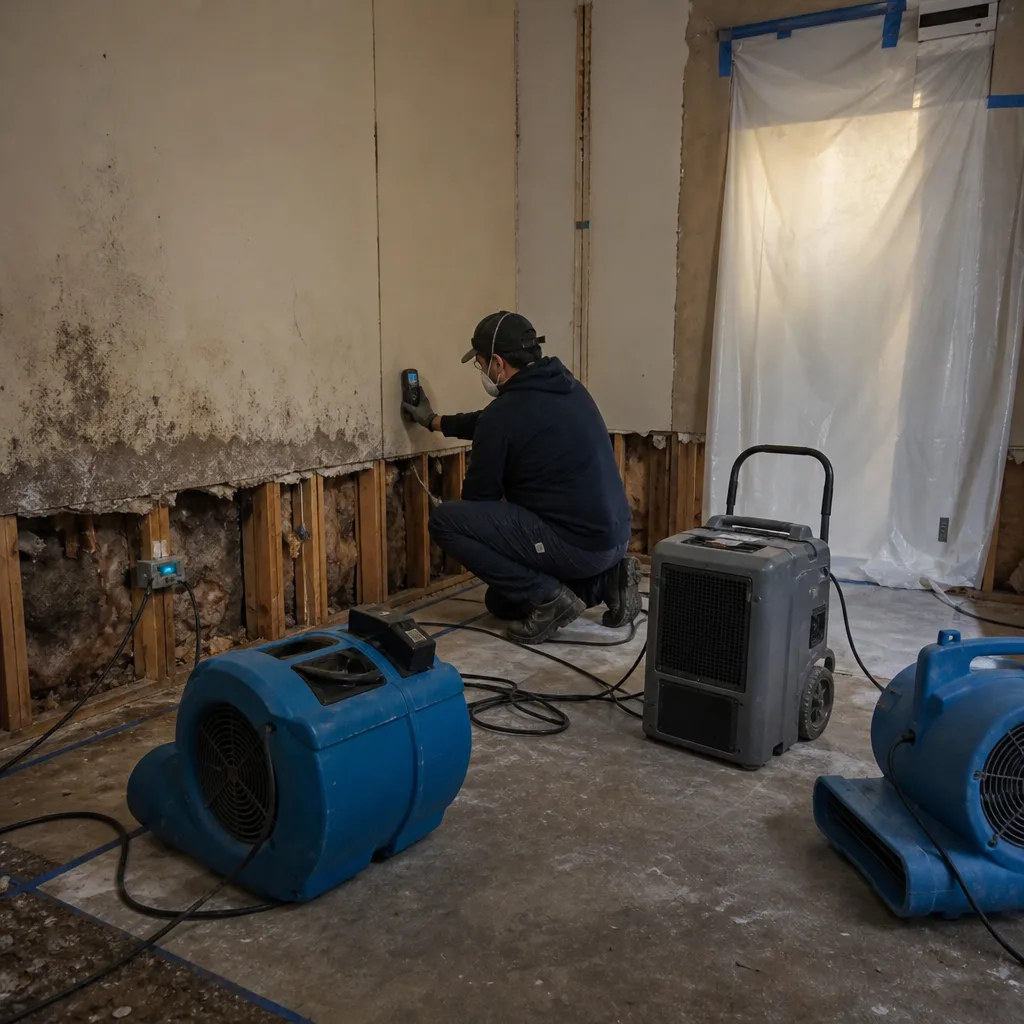 Before
 After
After