
 Mold remediation
 Water damage drying
 Fire & smoke cleanup
 Storm response
 Sewage cleanup
 Reconstruction
Free visual inspection and a written scope of work before any mitigation begins - photos, moisture readings, and drying logs go in your claim file
The scope we write is the scope we bill. Anything new gets shown to you, in writing, before we touch it.
Get your free estimateMold Remediation in Lancaster, TX: What It Costs and How It Works
Mold remediation in Lancaster typically runs $1,800 – $6,500 for a single-room job, with whole-home projects landing between $7,000 and $18,000 depending on square footage and how far the moisture has traveled. Black mold removal in Lancaster averages $2,500 – $8,000 when it involves drywall tear-out and antimicrobial treatment. Most Lancaster jobs take 2 – 5 days from containment to final clearance testing.
But here’s what matters more than the number: Lancaster homes sit on expansive clay soils, and that changes everything about how we approach mold. The slab wicks moisture upward into drywall long after a flood recedes. If you only treat the visible mold and ignore the capillary moisture beneath the slab, the problem comes back in weeks. We don’t skip that step. Call (254) 857-5210 for a written assessment of what’s actually happening in your home.
Fast, Reliable Mold Remediation Across Lancaster
If you’re searching for Mold Remediation after a summer storm pushed water through your foundation, or you’ve noticed that musty smell spreading through your hallways, you need a crew that knows Lancaster’s housing stock. We do. Our technicians work in Windsor Park, Ten Mile Creek, and the older 1970s subdivisions along Pleasant Run Road regularly, and we’ve seen what flash flooding does to slab-on-grade brick veneers. A live person answers when you call (254) 857-5210, 24 hours a day, and we can usually have a technician at your Lancaster door within a few hours of your call.
We don’t dispatch whoever’s available from across the metroplex. Keegan Water Damage Restoration runs crews from our Dallas-Fort Worth office who know Lancaster’s neighborhoods, its drainage problems, and its building codes. That local knowledge means we arrive with the right equipment the first time, not after a second trip.
Restoration work we handle
Why Keegan Restoration Dallas Is Lancaster’s Preferred Mold Remediation Company
Mold work in Lancaster isn’t a side gig for us. It’s one of three services we’ve run under the Garrison Partners umbrella since 2005, and every job is governed by The Garrison Standard. That means the price is in writing before we touch anything. Our techs are background-checked and arrive in uniform. And the work carries the 365-Day Done Right Promise: if it fails within a year, we return and fix it at no charge. Lancaster homeowners have a right to expect that.
Shane Pruitt, who leads our restoration work, has built the team around a simple set of rules we call The Garrison Code: show up inside the window, put the price in writing, do it by the book, leave the site clean, stand behind the work for a full year. Those aren’t marketing phrases. They’re the operating standard on every Lancaster job we run.
We also document everything. Every moisture reading, every drying log, every photo. When you file an insurance claim for mold remediation in Lancaster, that documentation matters. We format it to support your claim and work directly with adjusters so you’re not stuck translating restoration jargon for your carrier.
Black Mold Removal in Lancaster
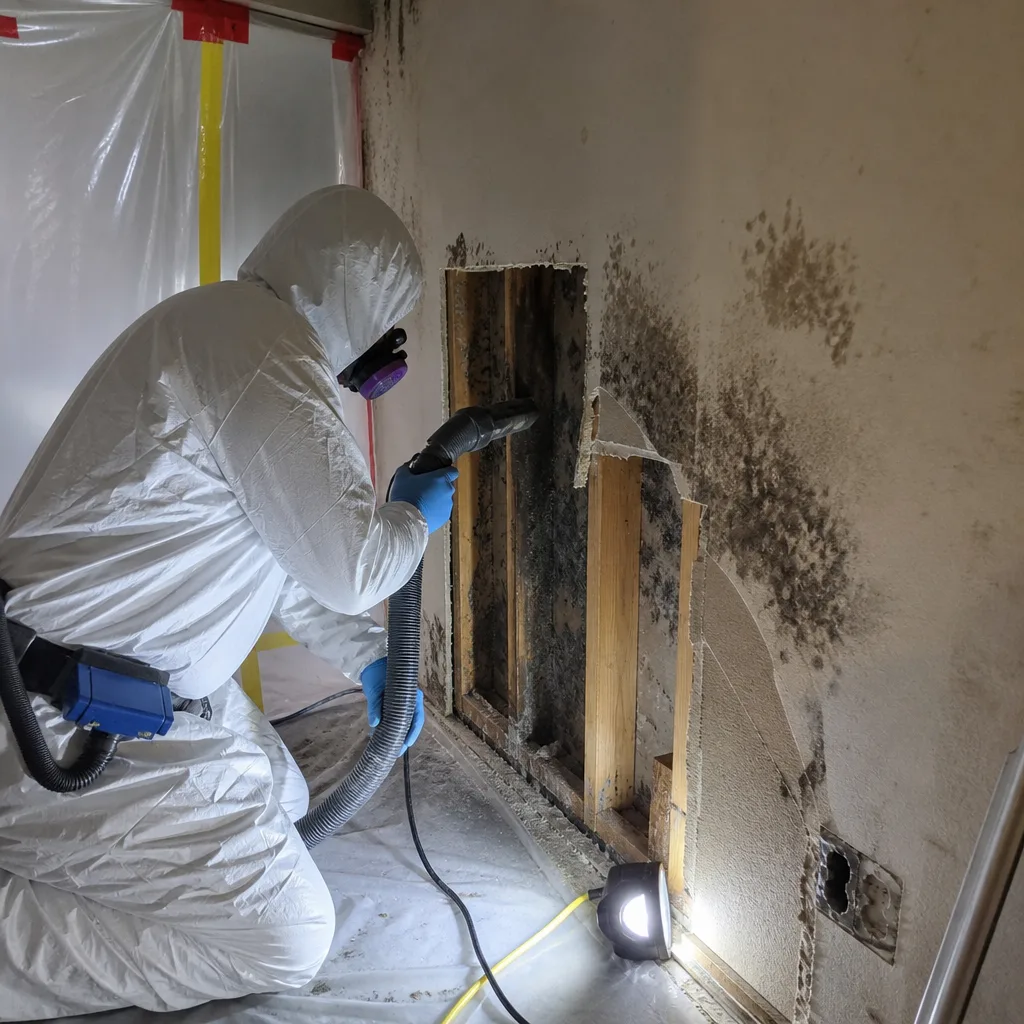
Black mold removal in Lancaster usually starts with a containment barrier and a written scope of loss, because Stachybotrys (the black mold people worry about) releases spores that spread through HVAC systems fast. We see it most often in Lancaster homes after pipe failures behind walls and after stormwater breaches in slab foundations, particularly in the Windsor Park and Ten Mile Creek corridors where drainage can’t keep up with summer thunderstorms. Expect $2,500 – $8,000 for black mold removal in a typical Lancaster single-story home, depending on how much drywall has to come out.
Containment and Source Removal
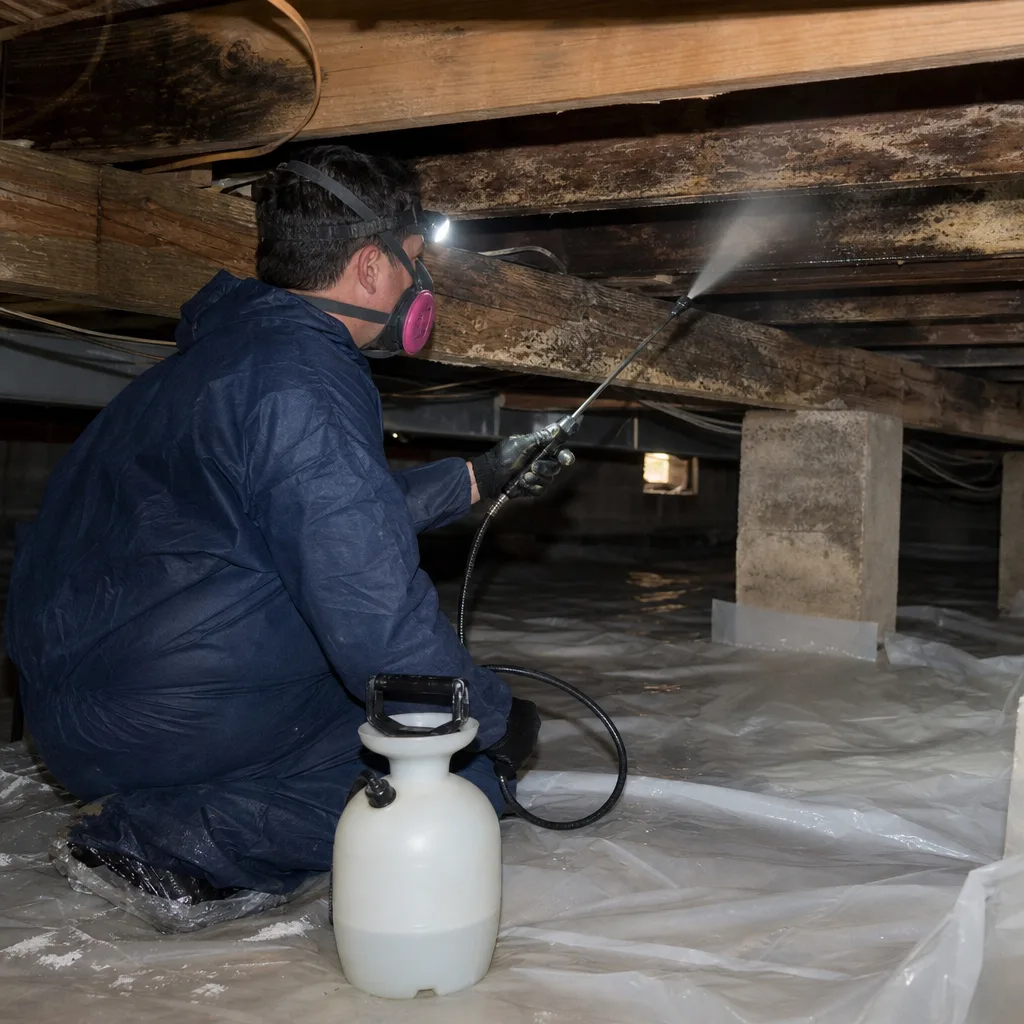
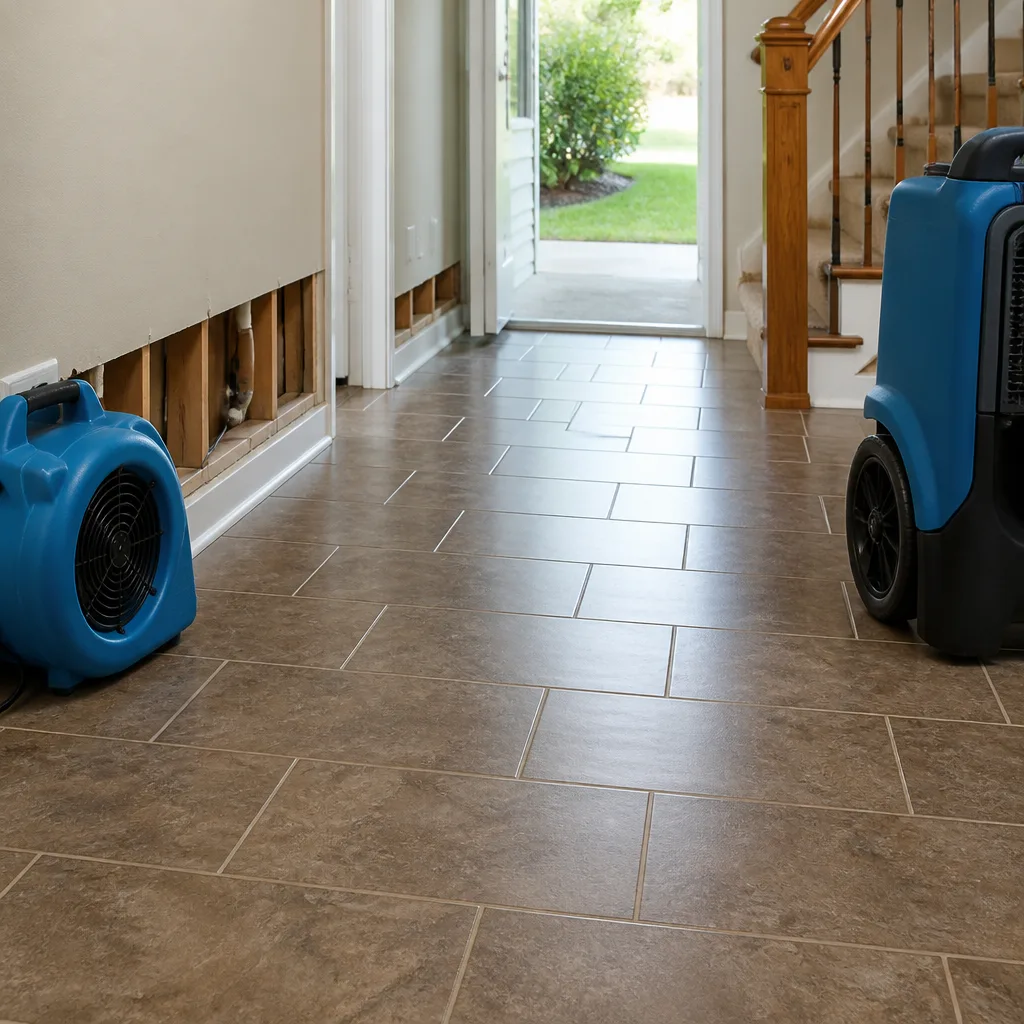
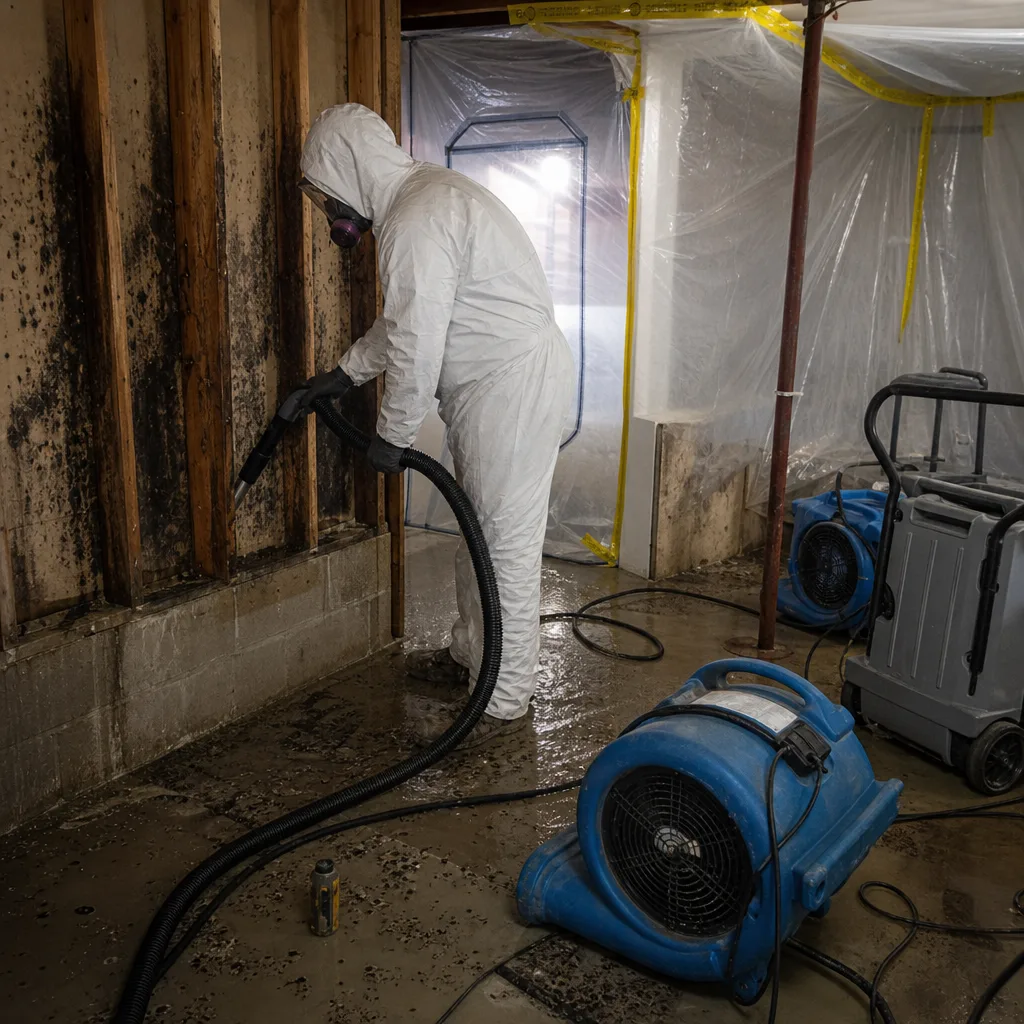
We seal the affected area, run negative air pressure with HEPA filtration, and remove the contaminated drywall and insulation. Every cut is documented with photos and moisture readings. We treat the exposed framing with an antimicrobial, then verify the moisture level in the surrounding structure before we rebuild anything.
Post-Remediation Verification
After removal, we run air scrubbers and re-test until clearance levels are met. You get the written drying log and clearance documentation for your records and your insurer. If the mold returns within 365 days, the Done Right Promise kicks in. We come back free.
Mold Removal Contractor in Lancaster
Hiring a mold removal contractor in Lancaster means asking harder questions than “how much.” The right question is whether the contractor maps moisture under your slab, because Lancaster’s expansive clay soil holds water beneath the foundation long after the surface looks dry. Skip that step and the mold returns. We run moisture mapping on every Lancaster job where slab wicking is a factor, and we write the readings into your scope before work starts. Typical single-room mold removal in Lancaster runs $1,800 – $4,500; larger areas with multiple affected rooms land higher.
Written Scope Before Work Begins
Before a single piece of drywall comes out, you get a written scope listing exactly what we’ll remove, what we’ll treat, how long drying will take, and what it costs. That price doesn’t move at the door. If we find additional damage behind a wall, we document it, show you, and get your sign-off before expanding the job.
Drying Logs and Insurance Documentation
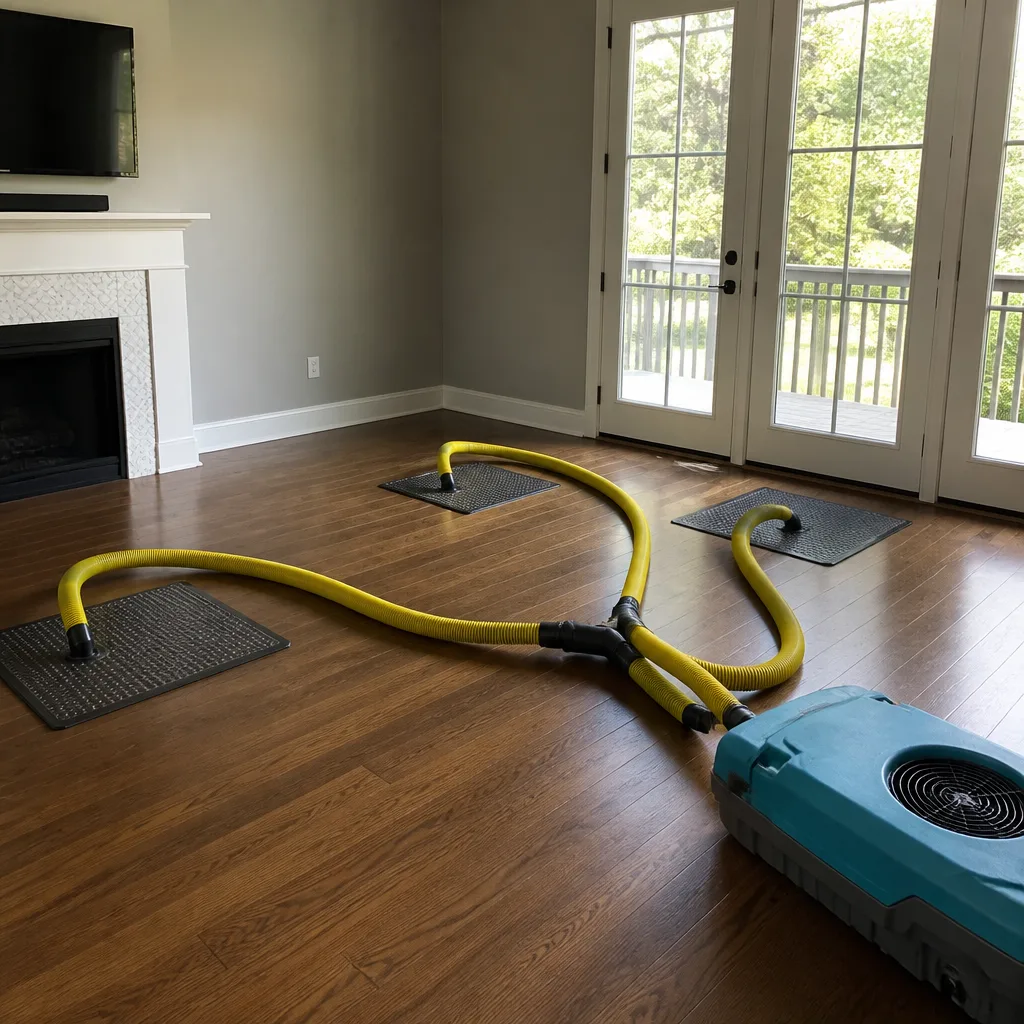
We run Dri-Eaz and Phoenix dehumidifiers with XPOWER air movers, and we log hourly moisture readings. That’s not theatrics. It’s how we prove to your insurer that the structural drying reached IICRC standards. Lancaster homeowners fighting a denied claim need that paper trail.
Trusted Brands We Service in Lancaster
We work on mold problems that originate from every major brand of HVAC, plumbing, and water heater found in Lancaster homes. The 1970s brick veneers on concrete slabs with original cast iron plumbing, the newer subdivisions with PEX runs and post-tension slabs, all of them. Because Lancaster has this mix of older and newer construction, we stock consumables and replacement materials locally so we’re not waiting on a parts run from across the metroplex when your job is already open. We run Dri-Eaz and Phoenix drying equipment, XPOWER air movers, and we follow IICRC, RIA, and IFA standards on every Lancaster job.
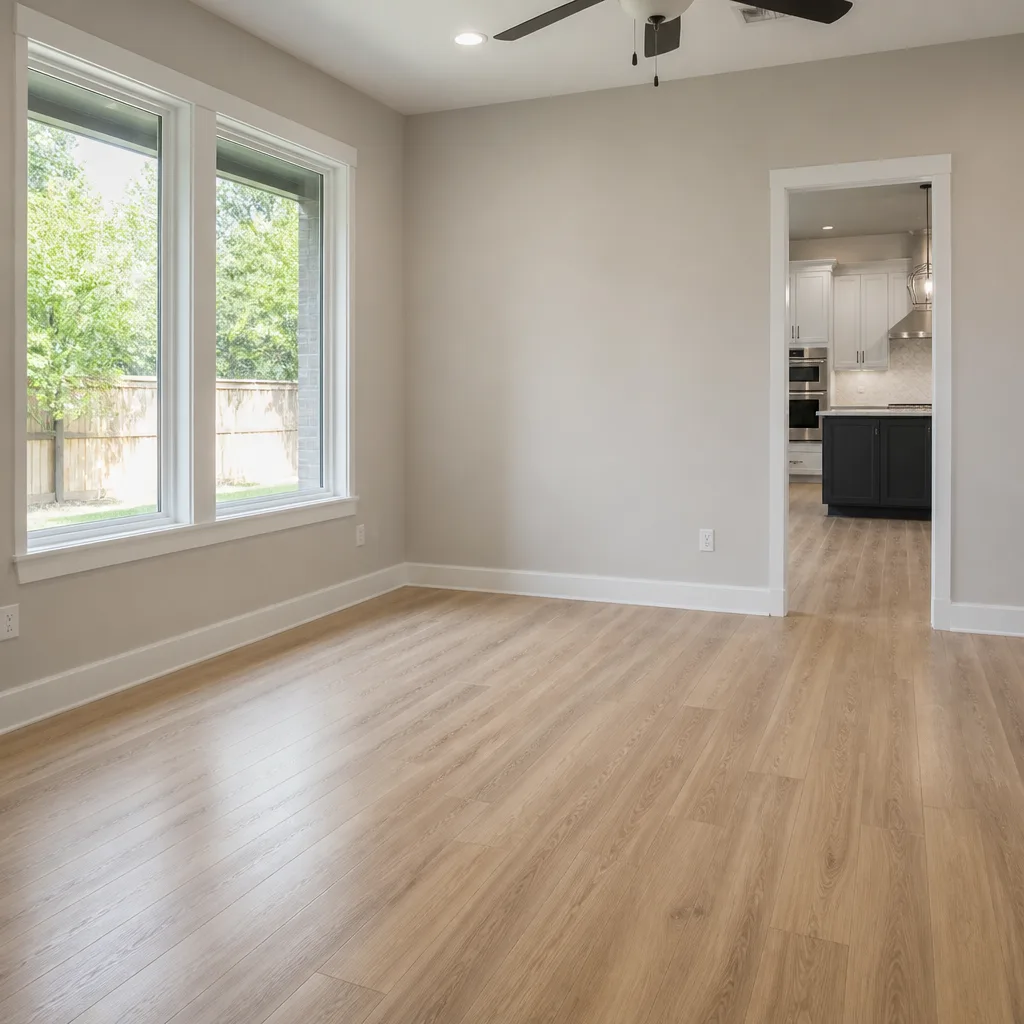
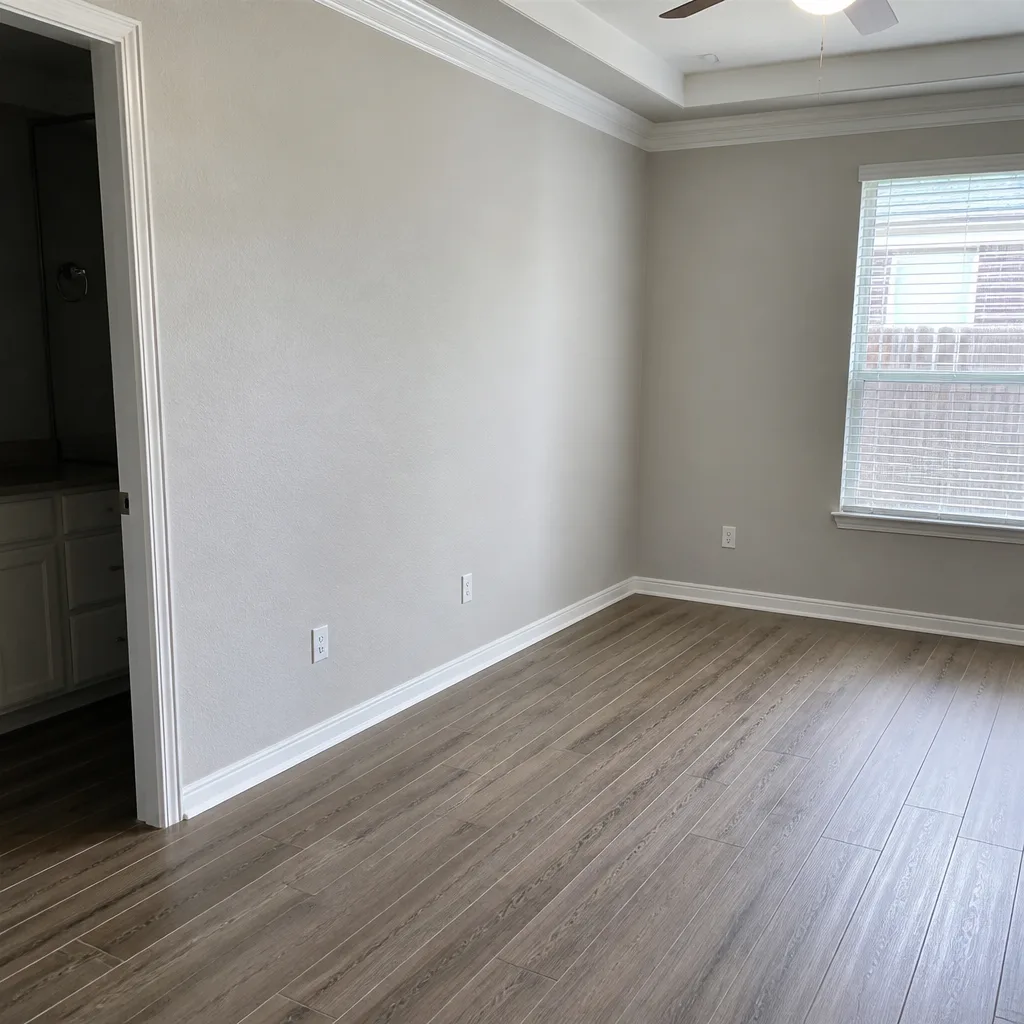
See the difference
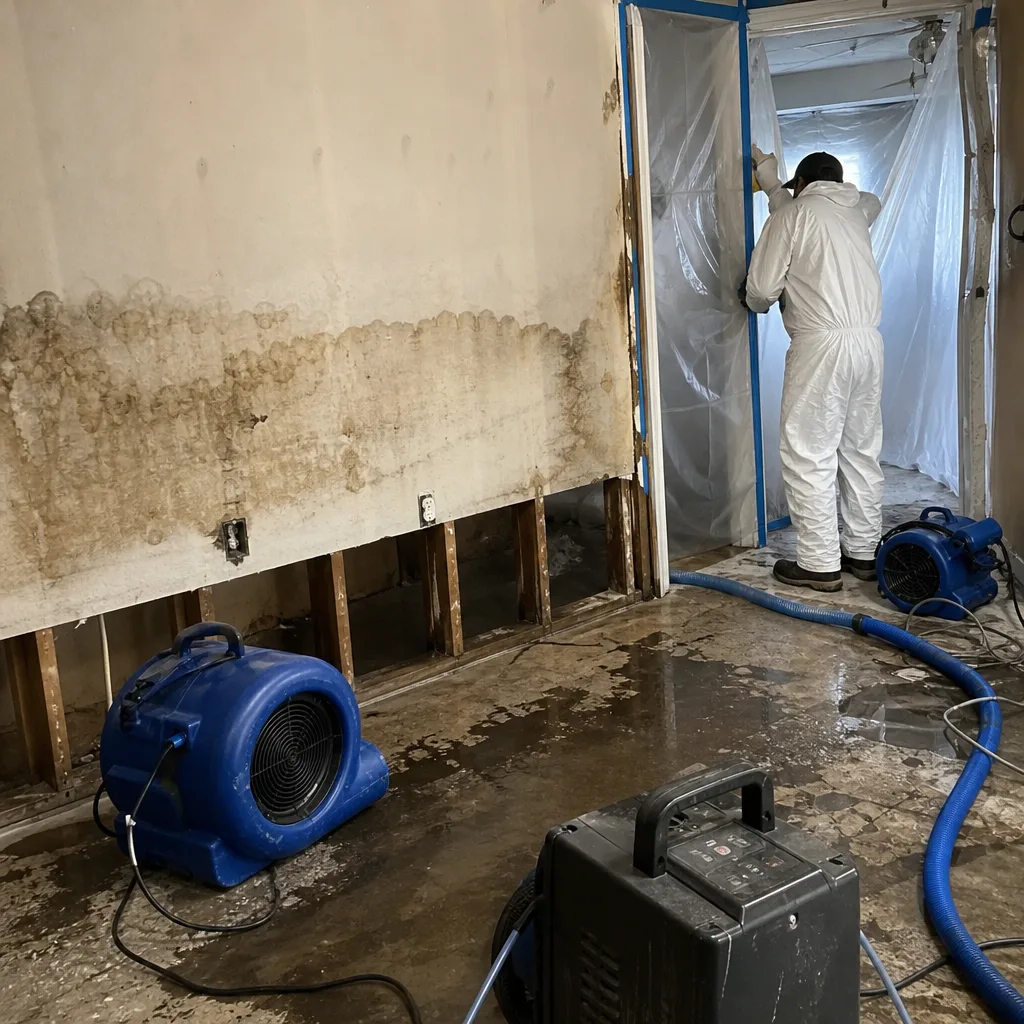 Before
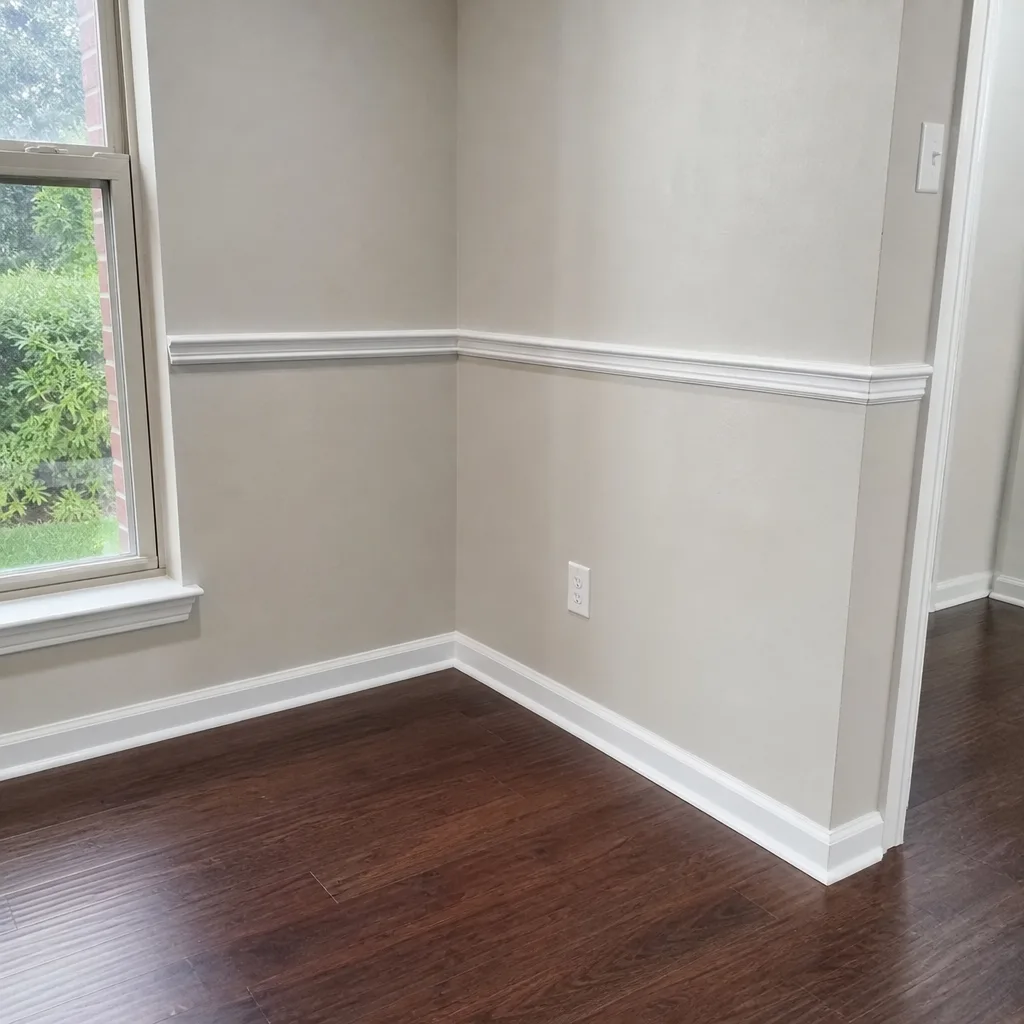 After
After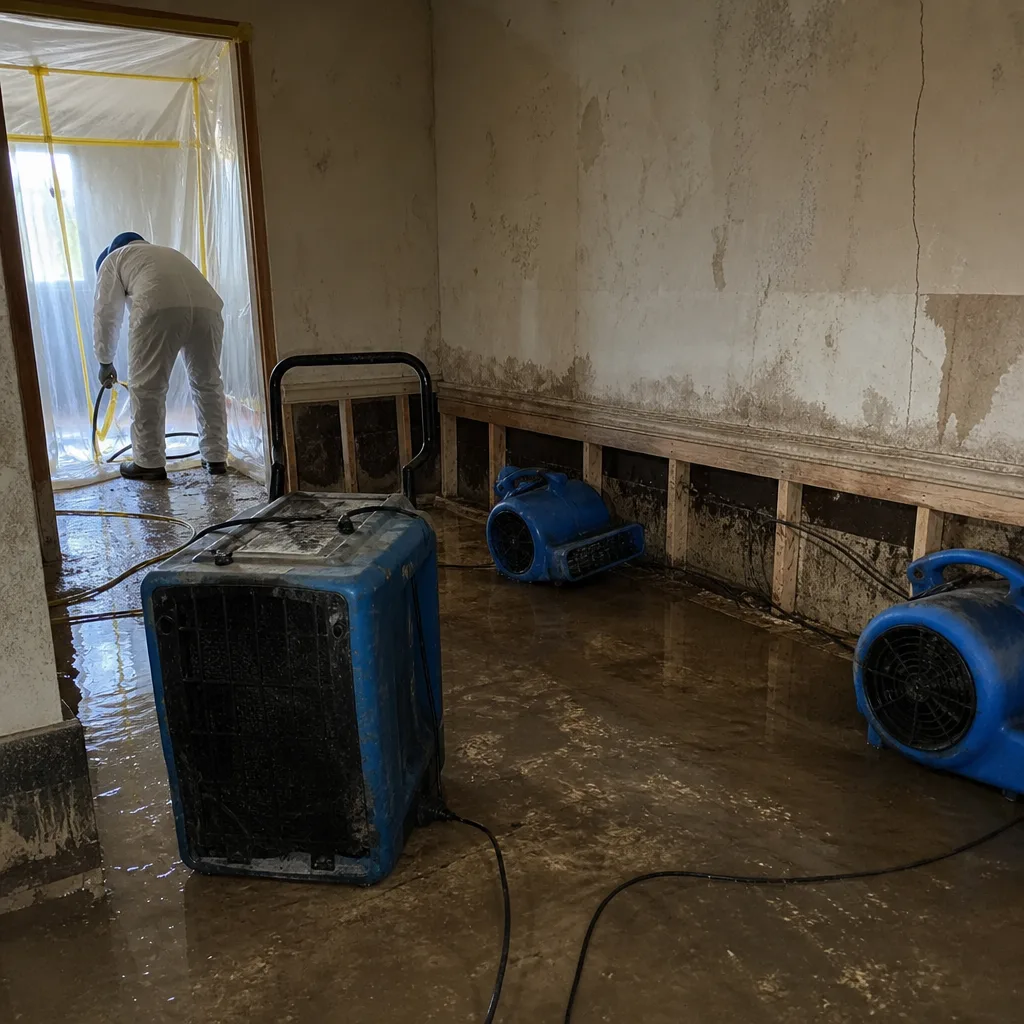 Before
 After
After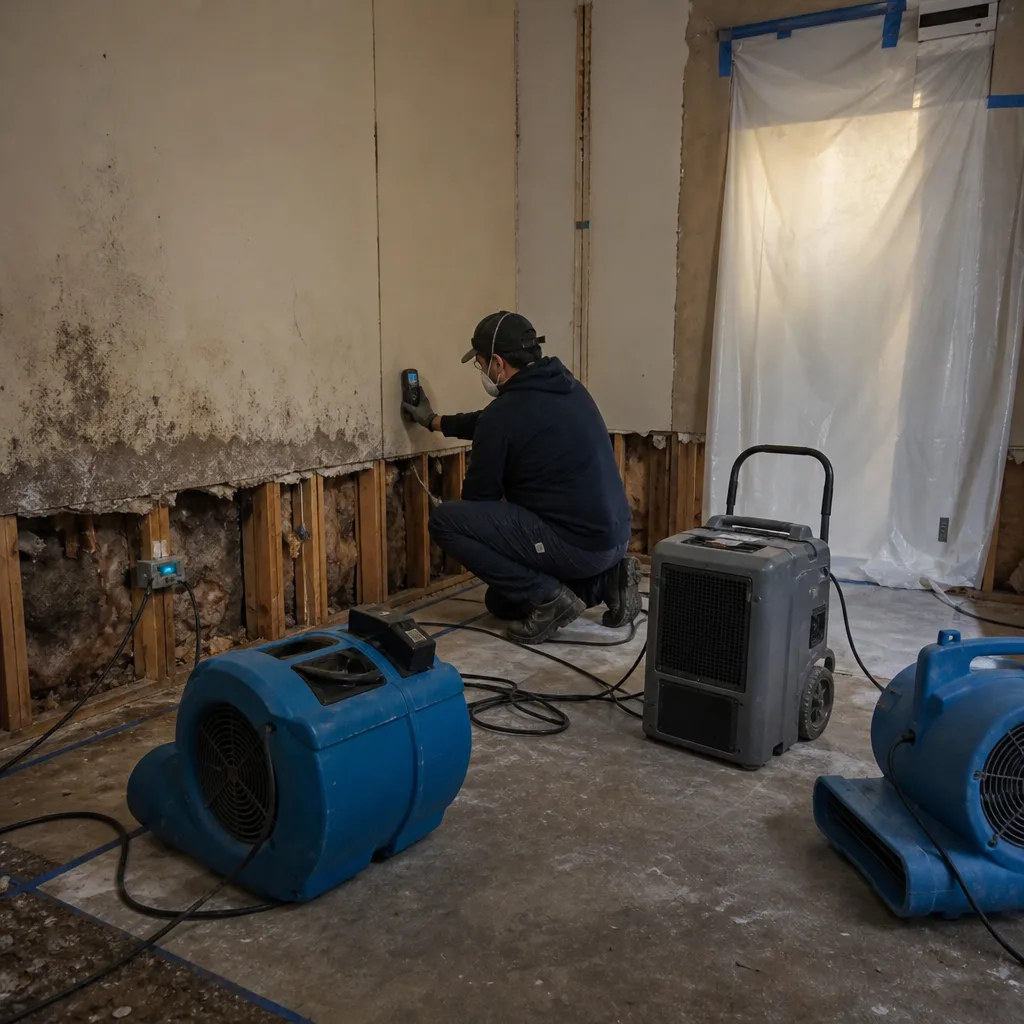 Before
 After
AfterCommon Mold Remediation Problems We See in Lancaster Homes
- Slab moisture ignored after a flood. Crews dry the air and the walls but skip moisture mapping under the slab. Lancaster’s expansive clay holds that water, and capillary action wicks it back into the drywall within weeks. We map under-slab moisture before we call a job done.
- Drainage overflow treated like clean water. When Windsor Park and Ten Mile Creek flood during a July thunderstorm, the water is Category 3: sewage, runoff, everything the drainage system couldn’t carry. Some contractors treat it like a spill and skip full containment. That spreads mold spores through the HVAC. We set up containment before anything else moves.
- Pipe failures that sat too long. Original cast iron plumbing in many 1970s – 2000s Lancaster homes leaks behind walls. If you wait more than 24 – 48 hours, mold colonizes the drywall and you’re looking at full removal instead of surface treatment. If you smell it, don’t wait.
- Post-remediation moisture rebound. We’ve been called back to Lancaster homes where another company “fixed” the mold but never addressed the source: a leaking window flashing, a bad grade against the foundation, a dryer vent pumping humidity into a wall cavity. We find the source first, then remediate.
Pricing for Mold Remediation in Lancaster, TX
Here’s what Lancaster homeowners can expect, in plain numbers. Mold inspection and testing runs $350 – $700. Mold removal for a single room averages $1,800 – $4,500. Black mold remediation runs $2,500 – $8,000. Crawl space treatment typically lands between $1,200 and $3,500. Air quality restoration after a flood or HVAC contamination starts around $900 and goes up with square footage. Moisture and humidity control work, including drainage corrections and dehumidifier installation, runs $1,500 – $5,000.
What moves the price: how far the moisture traveled, whether the slab is wicking, whether containment is needed to protect your HVAC, and what has to be torn out. We give you a written quote before any work starts. Call (254) 857-5210 for a free estimate. No one shows up and surprises you with a bigger number.
We Also Serve Cities Near Lancaster
Our Mold Remediation in Lancaster crews also run jobs in Cedar Hill, Dallas, Garland, and Addison. If you’re in a neighboring city and dealing with mold after a storm or a pipe failure, you’ll get the same The Garrison Standard treatment: written price, documented drying, and a full-year guarantee.
Serving Lancaster, TX - Our Local Coverage Area
We’re based in the Lancaster area and know this community well. Use the map below to see our service coverage - if you’re nearby, we can almost certainly help.
FAQs About Mold Remediation in Lancaster
Because the moisture source is under the slab, not in the drywall itself. Lancaster’s expansive clay soil holds water after floods and plumbing leaks, and capillary action wicks that moisture up through the concrete and into the drywall. Cleaning the surface without mapping and addressing the sub-slab moisture means mold returns in weeks. We treat both. Call (254) 857-5210 and we’ll run a moisture map before anything gets torn out.
Within 24 to 48 hours in Lancaster’s summer heat and humidity. Mold spores are everywhere; they just need moisture and a food source, and wet drywall is a food source. If stormwater from a drainage overflow got into your home, don’t wait a few days. The faster we set containment and start structural drying, the less has to be removed.
Category 1 is clean water, like a supply line break. Category 2 has some contamination. Category 3 is what comes up through Lancaster drainage overflows during heavy thunderstorms: sewage, runoff, and everything else. Category 3 means full containment is required, and any affected porous material usually gets removed, not dried. Some Lancaster contractors treat Category 3 as a mop-up job. That’s a mistake, and it’s an expensive one for the homeowner later.
Yes, two things matter. First, cast iron fails slowly, so a leak can run behind a wall for weeks before you see it. By the time you notice, mold has often colonized the wall cavity. Second, those older homes on slab have no crawl space to absorb the moisture, so it moves into drywall and insulation. You need a contractor who looks behind the wall, not just at the stain. Call (254) 857-5210 and we’ll trace the moisture.
Because fans move air; they don’t extract moisture from structural materials. In Lancaster’s humid summers, you need desiccant or refrigerant dehumidifiers pulling water out of studs, drywall, and slab. Hourly moisture readings tell us when the structure actually reached the dry standard. The drying log is also what your insurer needs to process a mold claim. We hand you that log with the job. If you’d rather have us deal with your adjuster directly, we do that too.
Written by Shane Pruitt, Owner at Keegan Restoration Dallas, serving Lancaster since 2005.